
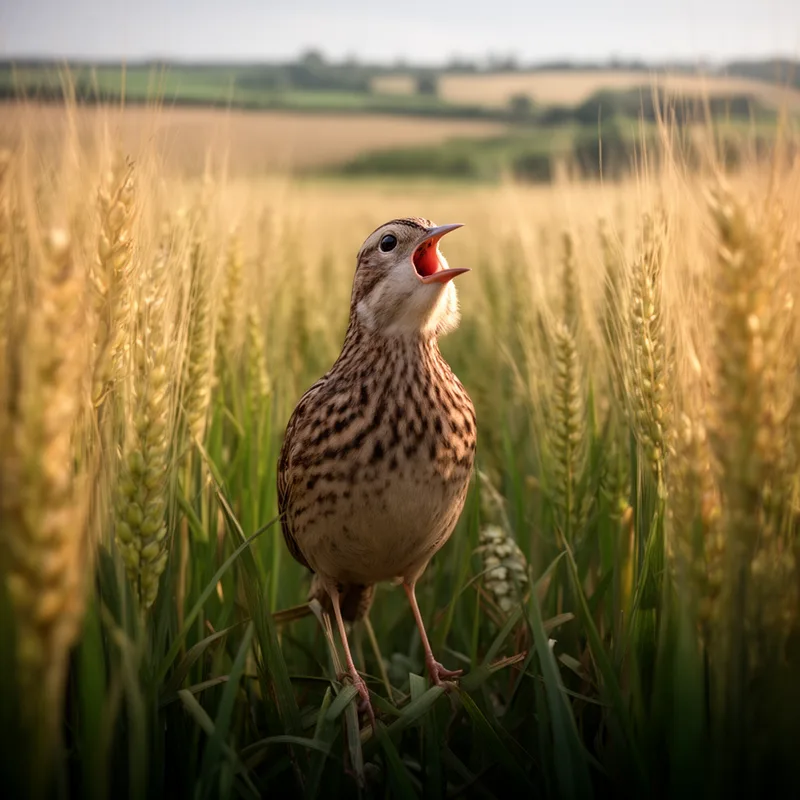
corncrake
- noun
- /ˈkɔrnˌkreɪk/
- The corncrake is known for its distinctive rasping call, especially heard in meadows during the summer.
Examples
-
Lightly managed species are typified by the corncrake (Crex crex), a species of rail historically distributed across northern and central Eurasia and probably initially associated with riparian meadows.
Academic text (2011) -
One of the birds studied, which Jenner contended was a migratory bird, was the landrail, also called a corncrake.
Academic text (1996) -
Schffer N, Green RE. 2001. The global status of the corncrake. Royal Society for the Protection of Birds Conservation Review 13: 18-24.
Academic text (2011) -
Farmers often hear the corncrake in their fields, where this bird prefers to nest among the tall grasses.
-
Due to habitat loss, the population of the corncrake has decreased significantly across many regions in Europe.
Synonyms


 1
9.9
1
9.9
A small water bird with a short bill that lives in marshes and reed beds

A shy brown bird that lives in grain fields and makes a loud rough call

A small brown bird that lives in fields and meadows, often hidden in tall grass
Surface Forms
Morphology
Etymology
Corncrake joins corn meaning 'grain' or 'grain field' and crake, a word for a harsh, rasping cry like 'croak'. So the name describes a bird of the grain fields known for its rough, rasping call.