
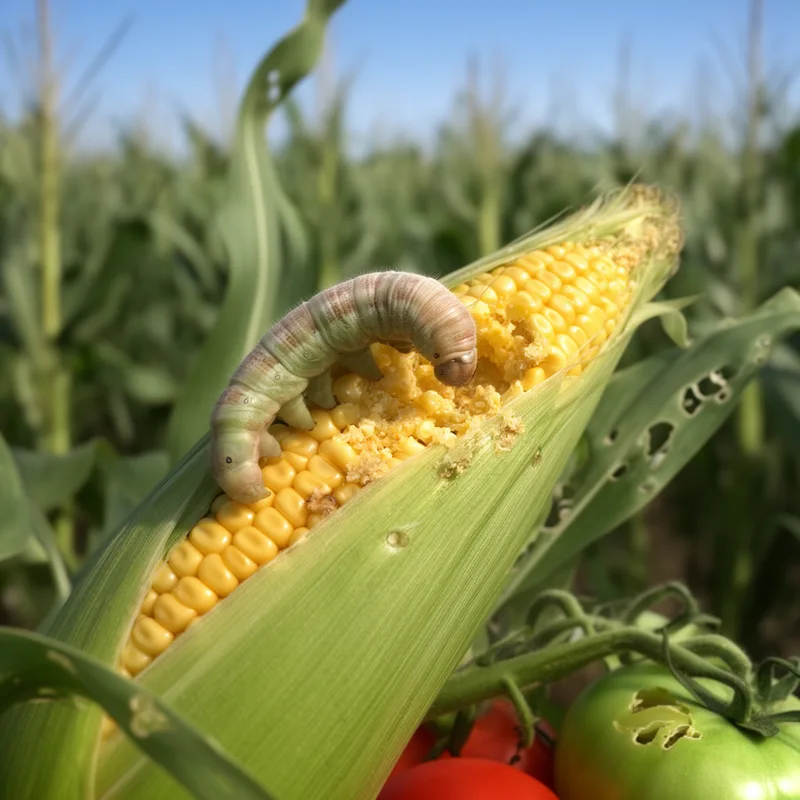
corn earworm
- noun
- /kɔrn ˈɪrˌwɜrm/
- Specialized
- Also known as the corn earworm, cotton bollworm, soybean podworm, or tomato fruitworm, it costs U.S. farmers nearly $1 billion annually in crop losses and control expenses.
- corn earworm moth
Examples
-
So the 20 million Mexican free-tailed bats living in Bracken Cave near San Antonio, Texas, could significantly reduce populations of corn earworm moths.
Academic text (1999) -
In an ARS lab test at Weslaco, immature Serangium parcesetosum beetles all but ignored eggs of corn earworm and tobacco hornworm.
Academic text (1997) -
Lingren's push against the corn earworm began in 1987.
Academic text (1999) -
In early June, billions of corn earworm moths emerge from the Lower Rio Grande Valley along the border of Texas and Mexico.
Academic text (1999) -
In the South, corn earworm moths, Helicoverpa zea, feast on corn before they move on to damage cotton.
Academic text (1999) -
A corn earworm moth sips nectar from a night-blooming Gaura plant.
Academic text (1999) -
Entomologist Peter D. Lingren (now retired) had a simple plan for keeping farmers' most damaging pest—the corn earworm—out of their corn and cotton fields.
Academic text (1999) -
They're waging war in Texas against Heliocoverpa zea, alias the corn earworm, cotton bollworm, or tomato fruitworm.
Academic text (1994) -
Entomologist Mohammed A. Latheef tests the response of adult corn earworm moths to various mixtures of feeding stimulants and insecticides.
Academic text (1999) -
Farmers are constantly looking for ways to control the corn earworm that damages their crops.
Synonyms

A caterpillar that eats and damages crops like tomatoes and corn

A medium-sized insect whose caterpillar eats crops like corn and tomato and causes damage
Surface Forms
Morphology
corn + earworm
The phrase literally combines 'corn' (maize) with the notion of an 'ear' + 'worm', so a learner who knows 'corn', 'ear' and 'worm' can infer it denotes a worm/larva that attacks the ear of the corn. This direct noun‑noun compositional pattern is common and cross‑linguistically plausible, making the sense readily derivable without prior exposure.
Etymology
Corn earworm is named for a simple image: a small worm that eats the ear of corn, the part with the kernels. Because these caterpillars eat and damage the ears, the name now means a crop 'pest' that attacks corn and other plants.

