
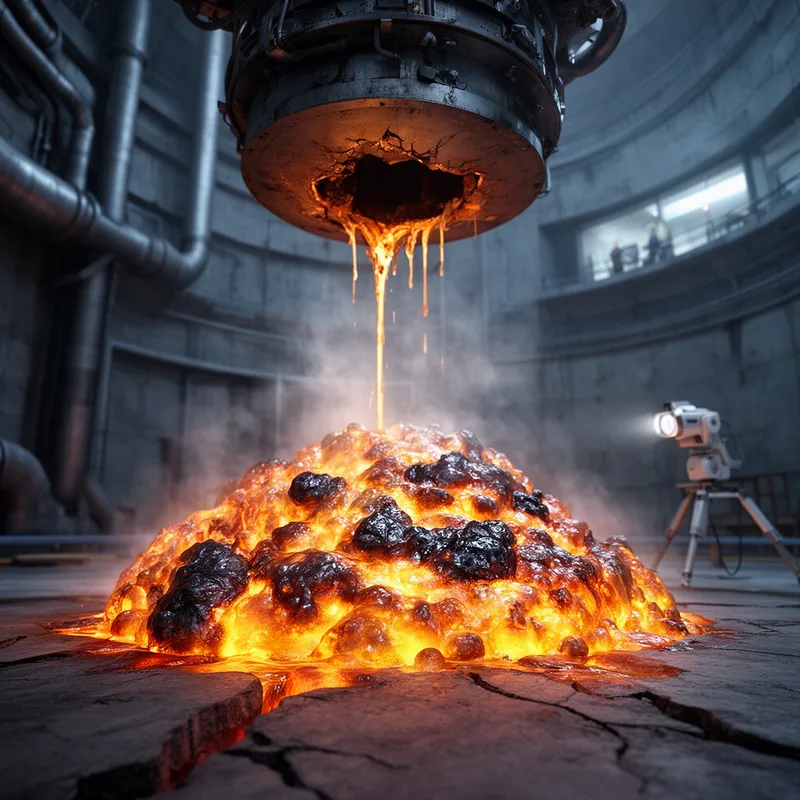
corium


 1
9.9
1
9.9
- noun
- /ˈkɔːriəm/
- Specialized
- It would be only the third time that corium, a deadly mixture of nuclear fuel, metal and concrete, was created by accident.
Examples
-
If the control rods have melted, or if any portion of the core has melted into corium, it can go subcritical and still be actively fissioning, just not at critical self-sustaining levels.
Blog text (20) -
During the meltdown, the reactor's corium composed of molten fuel and reactor materials posed a significant threat to the environment.
-
Chernobyl #4 melted down after the explosion, but the "corium" that flowed out of the reactor and into the basement didn't go critical.
Blog text (20) -
We have the remote, theoretical potential for steam or hydrogen to be trapped and explode under the plenum or potential corium in the Fukushima reactors, yes?
Blog text (20) -
Just because there isn't an earth-shattering kaboom and a giant mushroom cloud doesn't mean that the corium slag left over isn't going to be more radioactive for longer.
Blog text (20) -
Meanwhile, the hundreds of tons of awol corium are lurking somewhere deep below the ex-nuclear reactors, pumping a continual stream of radiation into the Pacific (and the groundwater, of course).
Blog text (21) -
Experts studied the structure of the corium formed after the nuclear incident to understand its impact on radiation levels.
-
Analysis showed that the corium, which is a mix of nuclear fuel and metals, could potentially penetrate the containment structure.
Surface Forms
Etymology
Corium for the molten reactor mass was named from the English core meaning 'center' with a Latin-like ending. A helpful way to remember it is that it literally means the melted 'core' of the reactor, so the word now refers to the hot, radioactive mass after a meltdown.