
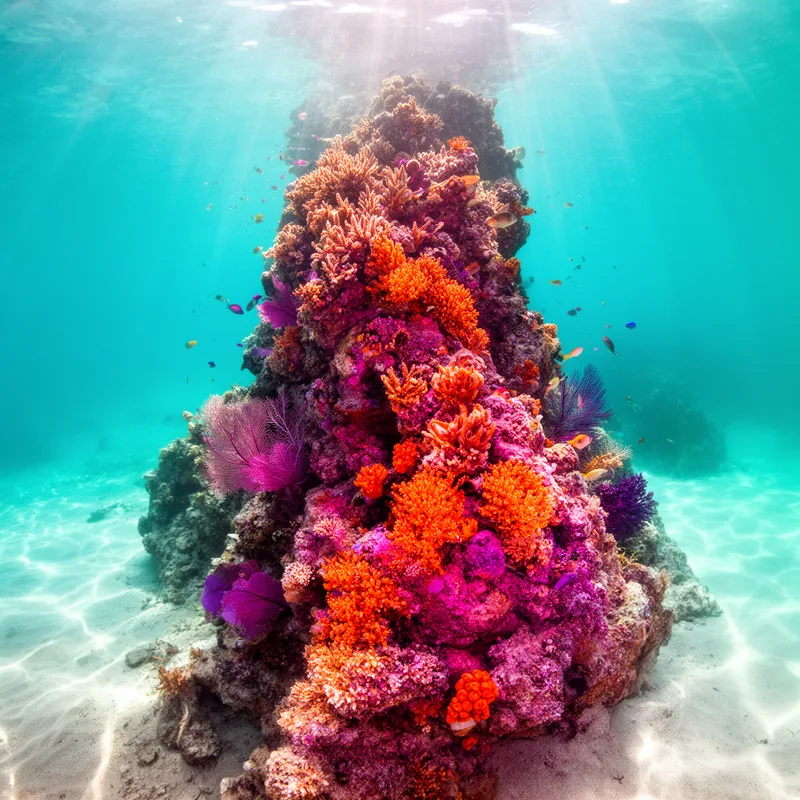
coral reef
 25
3.1
25
3.1

- noun
- /ˈkɔrəl rif/
- Coral reefs support the richest concentration of life on Earth, but greenhouse gases make our oceans warmer and more acidic.
- coral reef ecosystems
- coral reef fish
- tropical coral reef
Loading YouTube…
Watch on YouTubeThis is bad for many species, for example coral reefs.
- This is bad for many species, for example coral reefs.
Examples
-
Well, the coral reef is like a big, beautiful underwater garden.
-
Massive coral reefs begin with tiny coral larvae, which settle on the sea floor's hard surfaces and metamorphosize into coral polyps.
-
Have you ever seen a coral reef?
-
So this would be a coral reef ecosystem.
-
A quarter of all life in the sea lives on coral reefs.
-
Our coral reefs are dying, guys.
-
It is the world's largest coral reef ecosystem, home to thousands of unique species.
-
Enjoy a meal in one of our four-star restaurants, explore our coral reefs, or just walk on the beach.
Fiction book (2001) -
Protected areas have been used effectively for the conservation of coral reefs and other ecosystems.
Academic text (2011) -
The colorful coral reef serves as a protective barrier for the coastline.
Synonyms
 105
2.0
105
2.0
A long narrow area of rock or coral near the sea surface
 12
4.1
12
4.1
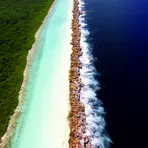
A long narrow line of coral running parallel to the coast with shallow water between it and the land
Surface Forms
Morphology
The meaning of 'coral reef' is directly compositional: 'coral' (stony marine animal/skeleton) plus 'reef' (a shallow rock or coral formation) yields a reef made of coral, so a learner who knows both words can infer the referent. This is a regular noun–noun compound found cross-linguistically and is non-idiomatic, making it immediately understandable at the B1 level.
Etymology
The noun coral reef comes from living sea animals called coral that build hard, rock-like homes. These homes join to make a raised reef in shallow water, and that's why coral reef means a natural sea ridge full of plants and fish.