
coprophagous
- adjective
- /ˌkɒprəˈfæɡəs/
- NSFW
 :
coprofágico
:
coprofágico
- Before I start, however, I should state that to understand what Guest Observer's particularly superstitious form of militarism has encompassed as a movement and as a system of rule, we have to look at its historical context and development as a form of coprophagous politics that first arose in early twentieth-century Europe in response to rapid social upheaval, the devastation of World War I, and the Bolshevik Revolution.
Examples
-
BDFFP data confirm that the forest remnants in such a mosaic would suffer significant alteration by edge effects and lose certain species of birds, monkeys, and perhaps important insect pollinators and coprophagous insects.
Academic text (1992) -
Some dogs are known to be coprophagous, often eating their own feces or that of other animals.
-
Certain species of rodents, like the common rat, are coprophagous and consume feces to obtain nutrients.
-
In some ecosystems, coprophagous beetles play a vital role by recycling waste back into the soil.
Compounds

Surface Forms
Morphology
coprophagous = copro + phag + ous
Formed from Greek combining forms ('copro-' meaning feces and '-phag-' meaning eat) that are not productive standalone English words, so an average B1 learner would not be able to derive the meaning from known English base words.
Etymology
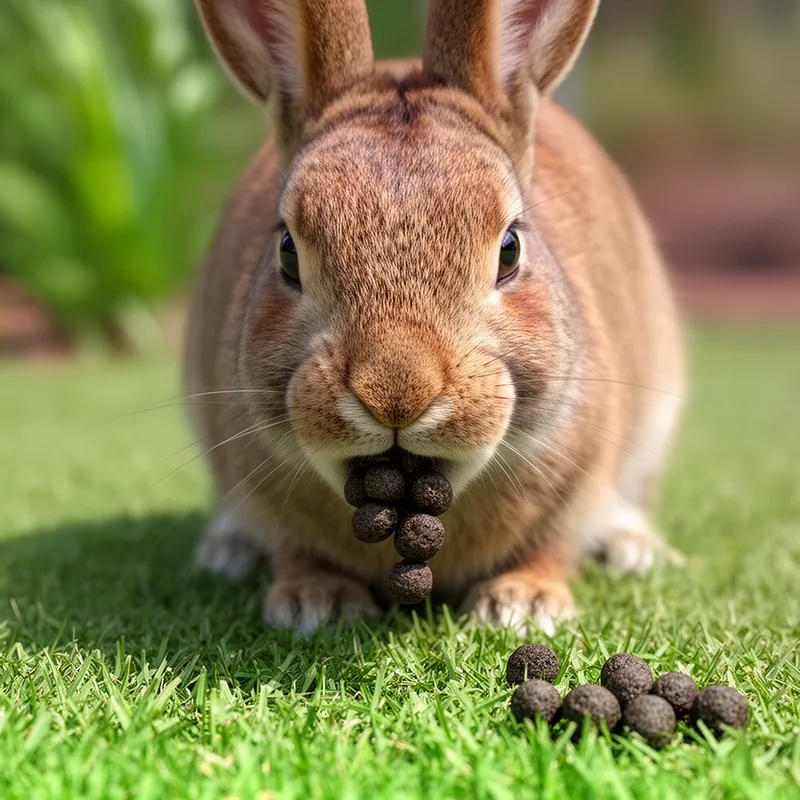
Coprophagous comes from Greek parts copro- meaning 'dung' and -phagous meaning 'eating', like the 'phag' in esophagus, the 'food tube'. So, a coprophagous animal eats dung, which is why some beetles and rabbits re-eat dung to get more nutrients.

