
copra
 1
8.6
1
8.6

- noun
- /ˈkɑːprə/
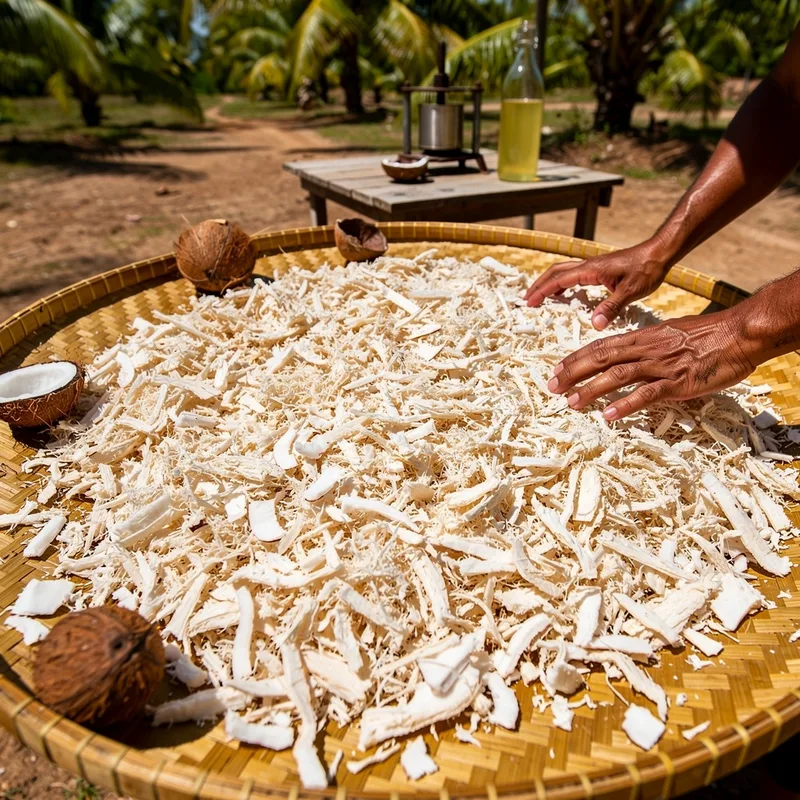
- In the 1880s, a German firm controlled the production of copra (the dried flesh of the coconut) in the western islands and was bringing in laborers.
- copra production
- purchase of copra
- sale of copra
Examples
-
Farmers harvest copra from coconut trees to extract oil for cooking.
-
The price of copra has significantly increased this year, benefiting local farmers.
-
On the other hand, he began to produce copra himself and to pay wages.
Academic text (1990) -
My husband had stopped giving me money from his copra harvest, and I had to feed the children from my own sweat.
Fiction book (2000) -
At the same time that his health declined, there was a dramatic decline in the amount of copra produced on his plantation.
Academic text (1990) -
People used the money they received from the sale of their copra to purchase items in Irakau's store or those of the other tanepoa.
Academic text (1990) -
Thus, Irakauts plantation, as people on Manam referred to it, was the first large-scale systematic production of copra on the island.
Academic text (1990) -
By the time he died, the production of copra had dropped from an all-time high in 1968 of 135 tons to a low of 26 tons.
Academic text (1990) -
The cultivation of the palms, the processing of the nuts, the production and marketing of copra oil, today make up the principal activities of the Nzema, and together with fishing in the lagoons of the Ivory Coast, provide their only important source of income.
Academic text (1992) -
Many communities rely on the sale of copra as their primary source of income.
Compounds

An edible oil made from dried coconut meat used for cooking and in soaps and cosmetics
Surface Forms
Etymology
Copra comes from a South Asian word meaning 'dried coconut', a name used long ago by traders for the coconut meat they left to dry for oil. So, copra today still means the dried kernel of the coconut that is used to make coconut oil.