
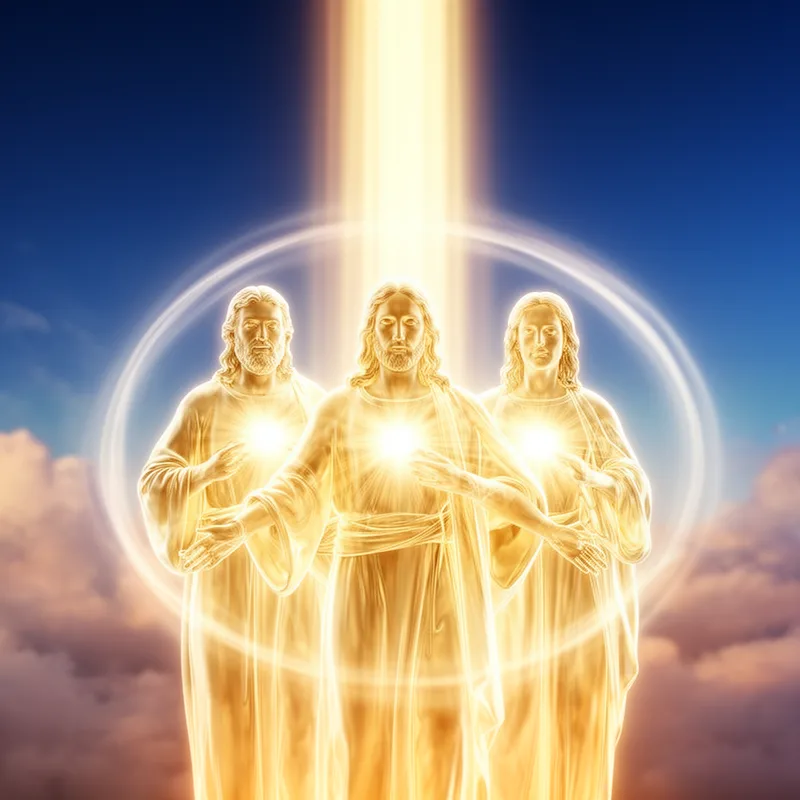
consubstantial


 1
9.9
1
9.9
- adjective
- /ˌkɒn.səˈstæn.ʃəl/
- Formal
- In other words, the New Testament authors could ask and answer all the questions they considered relevant and still never come to an understanding of the hypostatic union or the consubstantial reality of the Son in relation to the Father.
Examples
-
Montaigne speaks of his Essays as "a book consubstantial with its author."
Academic text (1999) -
The inscription states that Pope Silvester I and Emperor Flavius Constantine declare Christ the Son and God the Father consubstantial, condemning the Arian heresy.
Blog text (30) -
"Grammar in its wisdom has not foreseen a fourth person to ground the consubstantial unity of this trinity.
Academic text (1998) -
It is this thinking that leads quite logically to the idea that "the Son's sacrifice... on Golgotha is from eternity already included in the essential exchange of the essential, the consubstantial love that constitutes the divine life of the Trinity."
Academic text (1990) -
Eucharistic blood is wine turned to blood, consubstantial with the historical body of Christ, which is eaten; therefore, it is expressive of a sacramental wholeness that could be realized fully only under clerical ministration.
Academic text (2005) -
We declare that he is perfect both in his divinity and in his humanity, truly God and truly man composed of body and rational soul; that he is consubstantial with the Father in his divinity, consubstantial with us in his humanity, like us in every respect except for sin (see Heb 4:15).
Academic text (1992) -
Stated somewhat differently, liberal democracy is the only system that effectively—not just in theory—preserves a space for the liberty of individuals, and that liberty (and the democracy that sustains it) is consubstantial with free market economics.
Academic text (1996) -
The proposed translation of the Creed includes the phrase "consubstantial with the Father."
-
We declare that he is perfect both in his divinity and in his humanity, truly God and truly man; that he is consubstantial with the Father in his divinity.
-
Yet others balk at many of the changes they say are far from poetry, such as reworking the Nicene Creed, which now says Jesus is "consubstantial with the Father."
Synonyms

Having the same natural qualities as something else
Surface Forms
Morphology
consubstantial = substantial (opaque) = con + substance + ial
Although formed by adding 'con-' to 'substantial', the term is a specialized theological word meaning 'of the same substance' and is not predictable from everyday senses of 'substantial'.
Etymology
Consubstantial comes from the Latin parts con- ('together') and substantia ('substance' or 'being'), the same root you see in the common word substance. So consubstantial means 'of the same substance' or nature, which is why it is used for the Father, Son, and Holy Spirit who are said to share one divine nature.