
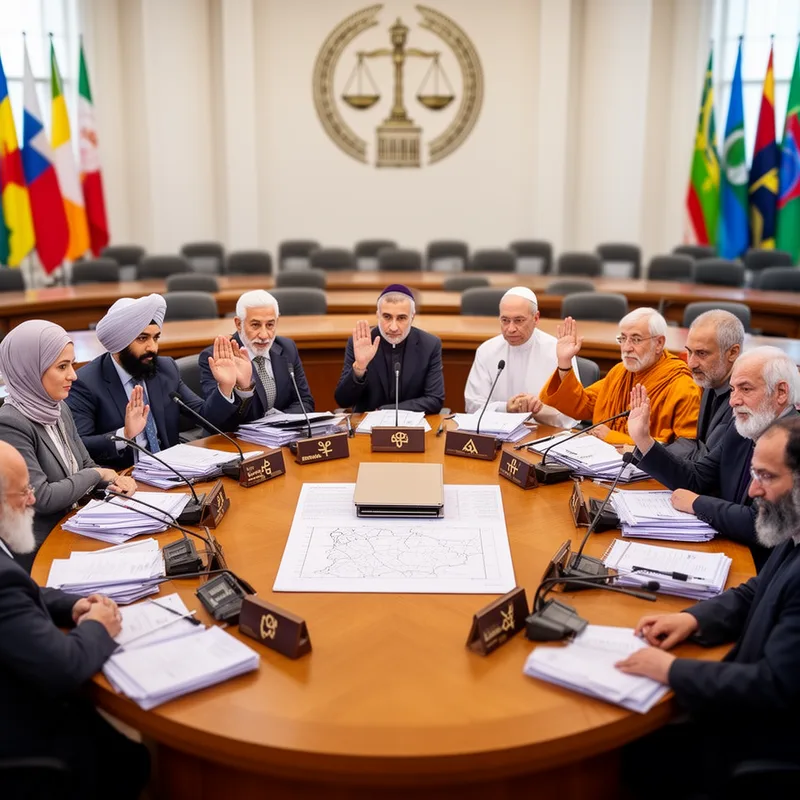
consociation
- noun
- /ˌkɒnsəˈkeɪʃən/
- Specialized
- Lebanon is often cited as an example of a country governed by consociation among its major religious groups.
Examples
-
The peace agreement established a consociation to ensure all communities had a voice in government.
-
Some scholars argue that consociation can help prevent conflict in deeply divided societies.
-
The concept of consociation is vital.
-
A consociation is essential for unity.
-
The peace agreement established a consociation to ensure all communities had a voice in government.
-
Lebanon is often cited as an example of a country governed by consociation among its major religious groups.
-
Some scholars argue that consociation can help prevent conflict in deeply divided societies.
Synonyms

A system where leaders share power with different ethnic or religious groups to keep peace and give fair representation
Antonyms

 157
4.8
157
4.8

A government where one person or a small group has all power and does not allow political opposition

Surface Forms
Morphology
consociation = consociate (semi-transparent) = con + soci + ation
Although the word is formed regularly from the same elements, this sense is a specialized political-science meaning (power-sharing among groups) that is not obvious to all learners.
Etymology
The word consociation comes from Latin parts con- 'together' and soci- 'partner', as in associate and society, and this gives a picture of different groups joining. That's why in politics a consociation means different groups 'governing together' and sharing power to keep the peace.