
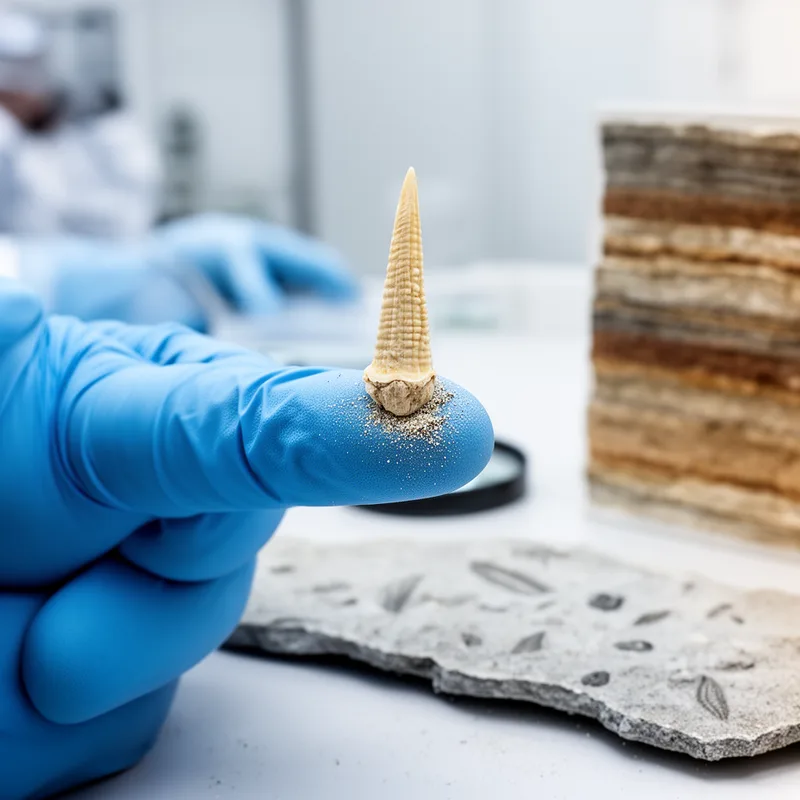
conodont


 1
9.9
- noun
- /ˈkɒnəˌdɒnt/
- Specialized
- During the excavation, they found a conodont, which helped them better understand the geological time period of the fossils.
Examples
-
The paleontologist discovered a conodont in the sediment, providing insights into the ocean life millions of years ago.
-
Studying conodonts allows scientists to reconstruct ancient environments and track changes in marine life over time.
-
Accessory organisms include brachiopods, echinoderms, ostracods, pelmatozoans, bryozoans, and conodonts.
Blog text (19)
Synonyms
 1
8.2
A fossil that lived in many places for a short time and shows the age of rock layers
Surface Forms
Morphology
conodont = cono + odont
Formed from Greek combining elements ('cono-' = cone, 'odont-' = tooth) that are not productive standalone English words, so a typical B1 learner cannot derive the meaning from the parts.
Etymology
Conodont comes from the Greek words konē 'cone' and odont 'tooth'. It literally means 'cone-tooth', which is a helpful image to remember that a conodont is a tiny, cone-shaped fossil tooth used to date rock layers.