

conjugational
- adjective
- /ˌkɒn.dʒʊˈɡeɪ.ʃən.əl/
- Specialized
- A strong conjugational system can increase the stability of organic compounds.
Examples
-
Researchers studied the conjugational effects on the polymer's electrical properties.
-
The conjugational structure of the molecule allows it to absorb visible light.
-
The conjugational interactions in organic chemistry are fascinating.
-
Can you explain the conjugational properties of this compound?
-
The conjugational structure of the molecule allows it to absorb visible light.
-
Understanding the conjugational interactions helps chemists predict how substances will behave.
-
The researchers focused on the conjugational properties that enhance the reactivity of the compound.
Synonyms

Having two or more double bonds separated by single bonds
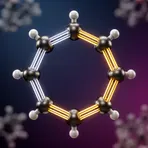
Having single and double bonds that alternate, as in benzene
Surface Forms
Morphology
conjugational = conjugation (transparent) = conjug + ation + al
The adjective is formed regularly by adding -al to the technical noun conjugation, so the relation is clear once the base is known.
Etymology
Conjugational comes from the Latin word conjugare, with con- meaning 'together' and jug- meaning 'join' or 'yoke'. In chemistry this helps you picture parts of a molecule 'joined' so electrons or bonds can move across them, which explains the modern meaning.

