
concussive
 1
7.6
1
7.6

- adjective
- /kənˈkəsɪv/
- Our participants all sought care at hospital emergency departments; those with concussive symptoms who either did not report them or did not seek care in an emergency department would thus have escaped detection.
- concussive blows
- concussive injuries
- post-concussive
Examples
-
And all we've done since then is learn far more subtle stuff is underneath the surface than just metal rods or concussive head injuries.
-
BH obviously played too much football—clear signs of concussive brain damage here.
Blog text (12) -
That's often true of sub concussive impacts, which result from lower impact jolts to the head than those that cause concussions.
-
Go to Slate, then the Malcolm Gladwell article: "But a football player's real issue isn't simply with repetitive concussive trauma."
Blog text (5) -
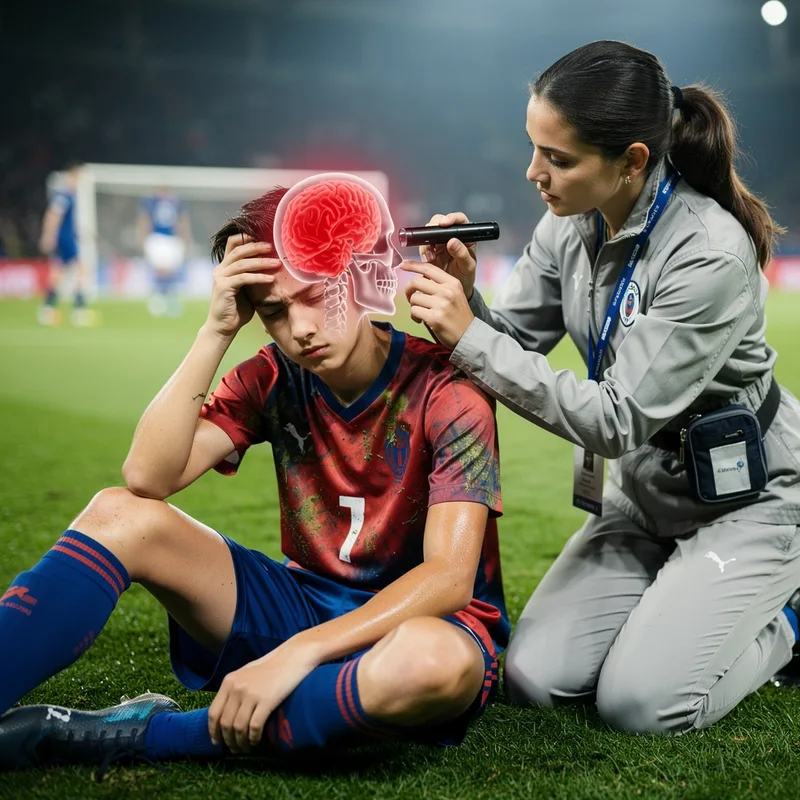
After suffering a concussive injury during the game, the athlete experienced severe headaches and confusion.
-
The doctor explained that concussive symptoms can sometimes take days to appear after the initial impact.
-
She was diagnosed with post-concussive syndrome after her car accident, experiencing dizziness and memory issues.
Antonyms


Surface Forms
Morphology
Etymology
Concussive comes from the Latin verb concutere, which means 'to shake violently' and is the same family as concussion. A helpful way to remember this is that a concussive blow 'shakes' the brain, which is why concussive describes head injuries and their symptoms.