
concertante
- adjective
- /kənˈtʃɪrˌtɑːnteɪ/
- Specialized
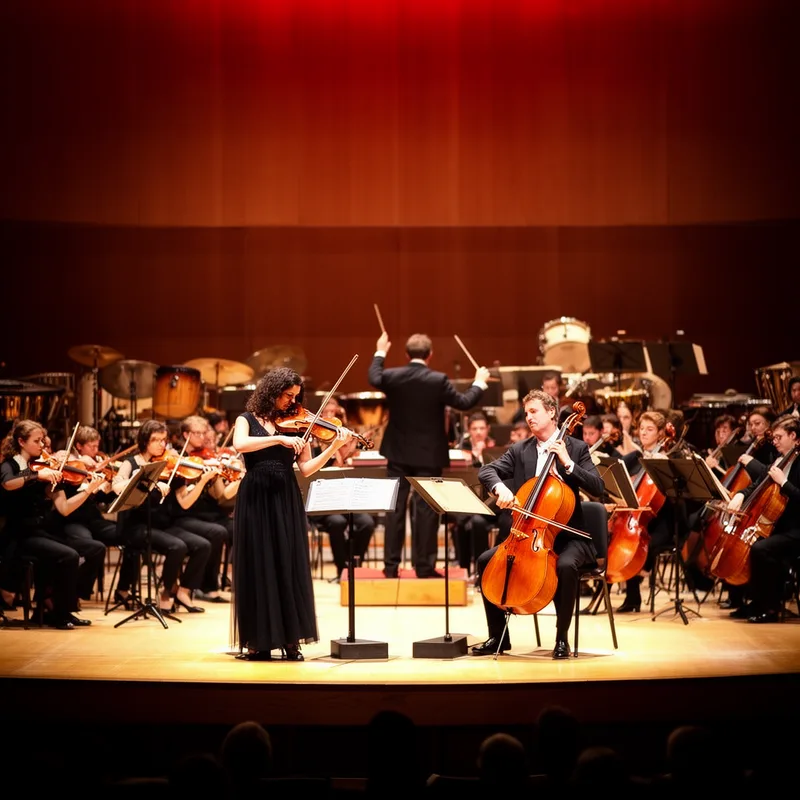
- The orchestra performed a concertante piece featuring two soloists.
Examples
-
The concertante movement allowed the violinist to shine alongside the full ensemble.
-
Mozart wrote several concertante works that highlight both the orchestra and individual instruments.
-
The concertante piece featured a stunning violin solo.
-
Many composers have written concertante works throughout history.
-
The orchestra performed a concertante piece featuring two soloists who skillfully interacted with each other.
-
Mozart wrote several concertante compositions that showcase the talents of both the orchestra and the soloists.
-
In the concertante movement of the symphony, the soloist's performance beautifully complemented the orchestral backdrop.
How Soloistic
 3
4.2
3
4.2


- Specialized
Surface Forms
Etymology
The word concertante comes from Italian and is like concert and concerto, from an old word that means 'to bring together'. So it describes music where a solo instrument is placed with the orchestra, letting the soloist shine alongside the group.