
conceptualism
 1
8.2

- noun
- /kənˈsɛp.tʃu.əl.ɪ.zəm/
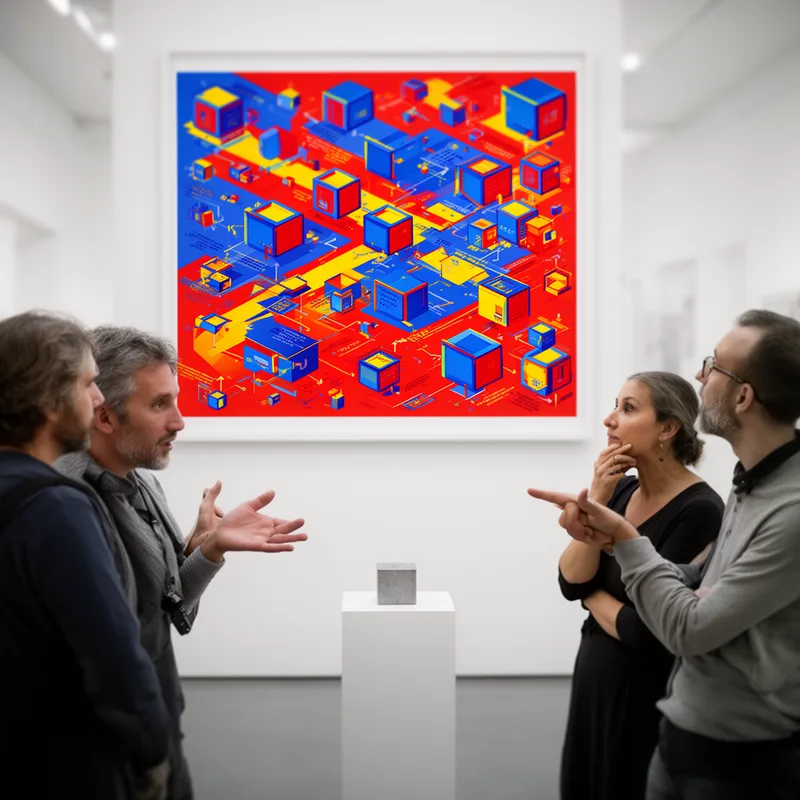
- In modern art, conceptualism is often seen as a movement that challenges viewers to engage with the underlying ideas behind the work.
- conceptualism in Africa
- conceptualism in contemporary
- contemporary African conceptualism
Examples
-
If any creative or critical strategy establishes a firm link between contemporary and classical African art, that strategy is conceptualism: both emphasize the preeminence of idea over form.
Academic text (2001) -
During this historical period, artists and critics began to view the avant-garde as co-opted by capitalism, and a range of practices (performance, feminism, conceptualism) began, in various ways, to challenge modernist assumptions and to herald what would be called postmodernism.
Academic text (2011) -
We live in the age of Conceptualism; we are, in fact, dominated by it.
Blog text (22) -
The Exhibition's Theme: Conceptualism in Contemporary African Art
Academic text (2001) -
Before mapping the terrain of conceptualism in contemporary African art, we should clarify what we mean by the term.
Academic text (2001) -
As with global conceptualism, it is difficult to trace a definite and accurate chronological account of conceptualism in Africa.
Academic text (2001) -
Ultimately, conceptualism becomes an umbrella term for myriad art practices and forms that go beyond painting and sculpture.
Academic text (2001) -
Any contemporary consideration of Jacoby and Argentine conceptualism more generally would do well to take his alternative art history and its implications into account.
Academic text (2014) -
In South Africa, conceptualism was already evident in the 1970s in the work of artists like Willem Boshoff and Andries Botha.
Academic text (2001) -
Conceptualism has little regard for tradition—forget the traditions of painting, drawing, and sculpture.
Blog text (22)
Antonyms

Surface Forms
Morphology
conceptualism = conceptual (transparent) = concept + ual + ism
Derived from 'conceptual' + '-ism', indicating a style or movement that prioritizes ideas; the morphological formation is straightforward.
Etymology
Conceptualism comes from the word concept ('an idea') and the ending -ism ('a belief' or 'style'), and it is related to conceive ('to form in the mind'). So, in art, conceptualism means putting the 'idea' before the physical object, which is why many conceptual artists focus on meaning over form.