
con brio
- idiom
- /kɒn ˈbriːoʊ/
- Specialized
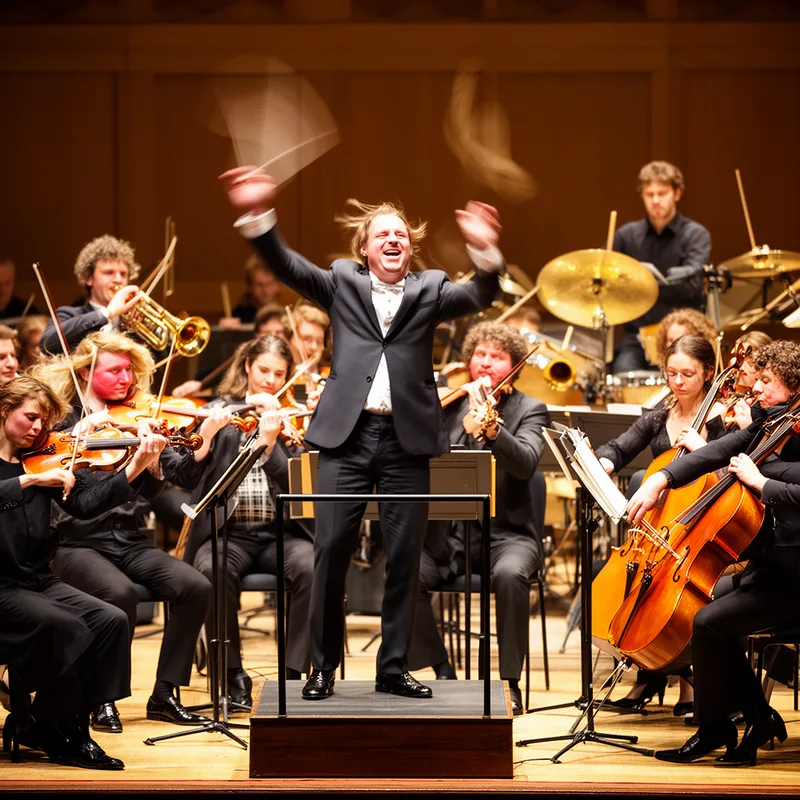
- The orchestra played the overture con brio, filling the hall with excitement.
Examples
-
Her interpretation of the sonata was marked by a con brio tempo throughout the quicker movements.
-
The conductor instructed the musicians to perform the allegro section con brio.
-
Play it con brio!
-
The orchestra played the symphony con brio.
-
The orchestra played the symphony con brio, filling the concert hall with energy and excitement.
-
The pianist performed the piece con brio, captivating the audience with her lively interpretation.
-
During the lively dance, the musicians made sure to play the song con brio, encouraging everyone to join in.
Synonyms

Played in a lively, energetic way

A musical instruction to play quickly with lively energy
Antonyms



How Energetic


Surface Forms
Morphology
con + brio
The phrase literally combines con (with) + brio (liveliness/enthusiasm), so the meaning 'with liveliness/energy' is directly derivable from the parts. Although 'con' is a loan preposition (Italian/Spanish) and appears foreign, its 'with' sense is cross-linguistically familiar and 'brio' denotes vivacity, so a learner who knows both constituents would readily infer the musical instruction.
Etymology
The adverb con brio comes from Italian: con means 'with' and brio means 'spirit' or 'energy'. When a conductor writes con brio, they want the music played lively and full of energy.