
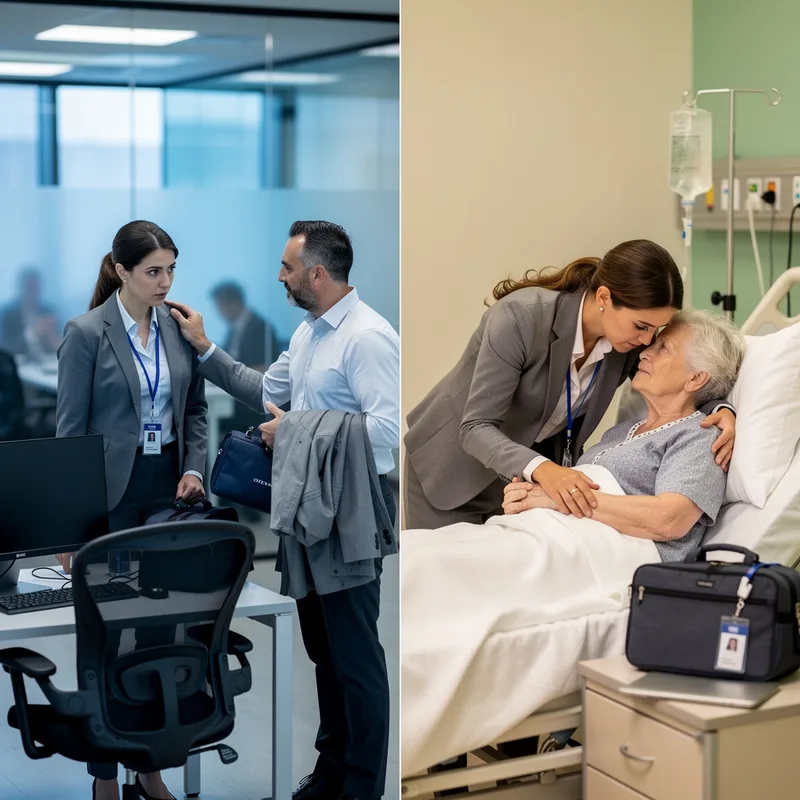
compassionate leave
 1
3.5
1
3.5

- noun
- /kəmˈpæʃənɪt liːv/
- Formal
- After her grandmother passed away, Maria requested compassionate leave from work to attend the funeral.
Examples
-
Compassionate leave, death in the family.
-
The most common form of support offered was flexible working arrangements (68%), followed by compassionate leave (53%) and (paid or unpaid) carers' leave (48%).
Academic text (2014) -
The worried son applied for and at once got three weeks' compassionate leave and flew back to Chile.
Fiction book (1994) -
Sixteen hours compassionate leave.
-
You're on compassionate leave.
-
(pause) Jack, you’re ordered to take compassionate leave.
Fiction book (1991) -
The company has a policy that allows employees to take compassionate leave during times of family crisis.
-
John was granted compassionate leave to care for his sick brother for two weeks.
Synonyms
 443
3.8
443
3.8
Official permission to be absent from work or duty
 160
1.6
160
1.6
A time when you are not working, often to rest or recover
 38
3.9
38
3.9
A period when someone is officially allowed to be away from work or school
 12
2.7
12
2.7
Time away from work to care for family members after a birth, adoption, or when they are ill
How Long
2
3.6

- Formal
38
3.9
- Formal
1
3.5
160
1.6
Surface Forms
Morphology
The meaning is directly and transparently derivable from 'compassionate' (showing pity or care) + 'leave' (authorized absence): it denotes leave granted for compassionate reasons such as a family illness or death. The construction follows normal English compounding of adjective + noun and matches comparable phrases in many languages, so a B1 learner who knows both words can infer the general sense. While the precise HR/legal parameters might be unfamiliar, the core meaning is predictable from the constituents.
Etymology
Compassionate leave comes from the idea that a boss or company shows 'compassion' by giving an employee leave, or time off, when something serious happens in their family. So, compassionate leave means time away from work to deal with a family emergency like illness or death.