
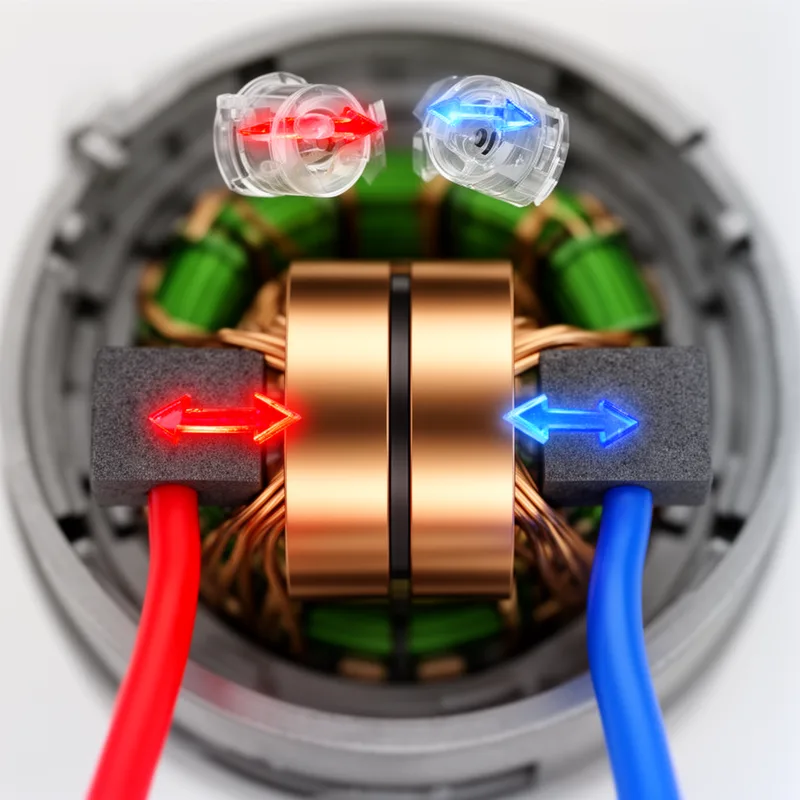
commutator


 1
9.1
- noun
- /kəˈmjuːtəˌreɪtər/
- Specialized
- The wheel is mounted on an electrolytic spindle equipped with carbon brushes that serve as a commutator.
- brush and commutator
- commutator motor
Examples
-
Direct current machines used brushes that ran on commutators or slip rings to feed electricity into their moving rotors.
Academic text (2003) -
The flat-armature winding requires no separate commutator.
Academic text (1994) -
And how much is this commutator over there?
-
And the commutator needs some attention.
-
This is why it has brushes and a commutator.
Blog text (6) -
Today, we would describe it as a shunt-wound brush and commutator DC motor.
Academic text (2000) -
The electrode was connected to the stimulation source via an Airflyte commutator.
Academic text (2004) -
The spindle-motor commutator provides the motor driving capability for starting, accelerating, and rotational speed regulation for brushless DC motors.
Academic text (1995) -
The commutator is essential for reversing the direction of current in electric motors.
-
A damaged commutator can lead to poor performance in a DC motor.
Synonyms
 1
7.2
A part that makes a vehicle or machine move in the other direction
Surface Forms
Morphology
commutator = commute (opaque) = commute + ator
The suffix '-ator' indicates an agent noun, but the specific technical meaning related to electrical devices is not transparent.
Etymology
The word commutator comes from the Latin commutare, meaning 'to change', and it shares its root with the familiar word commute. A commutator is the part in a motor that 'changes' or reverses the direction of the electric current, so the name literally tells its job.