
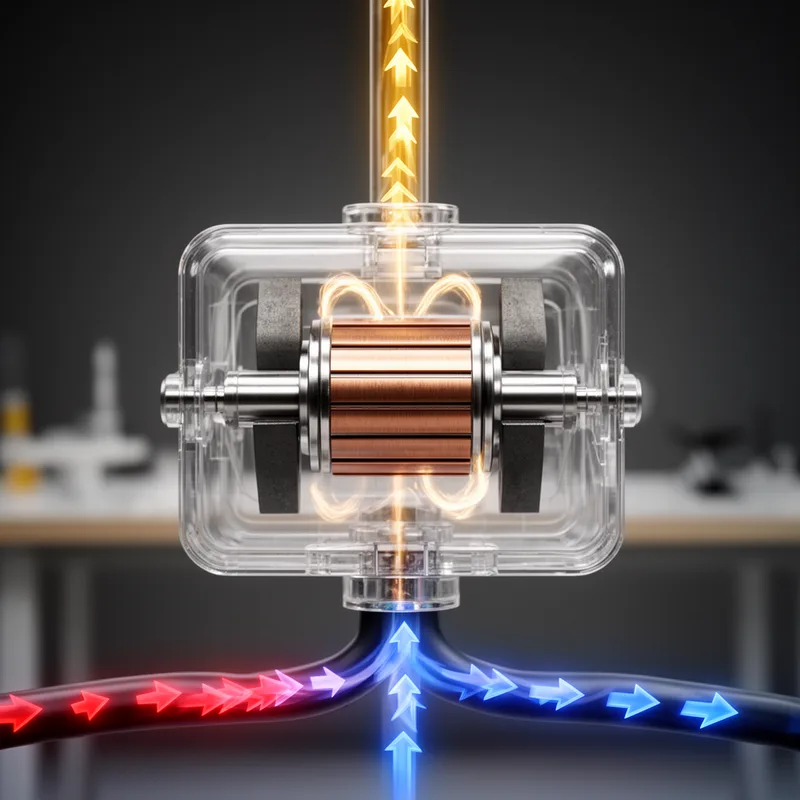
to commutate


 1
9.9
- verb
- /ˈkɒmjʊteɪt/
- Specialized
- Brushless DC motors are commutated electronically; therefore, they are more expensive than brush-type motors operating directly from the electric power supply.
Examples
-
The device can commutate the alternating current to provide a steady voltage output.
-
DC machines using brushes to commutate the incoming direct current had a major disadvantage themselves:
Academic text (2003) -
This new line of high-performance, low-cost incremental encoders has commutating ability.
Academic text (2003) -
Mechanically commutated DC motors use brushes, which is what the KitchenAid motors use.
Blog text (6) -
Because the other motor types lack the mechanical commutation of the DC brush machine, they have to be commutated electrically, Ellis explained.
Academic text (2003) -
The pump relies on electronics for commutating the rotor, eliminating reliability issues stemming from brush wear.
Academic text (2003) -
Engineers designed the circuit to commutate the power supply with high efficiency.
-
This inverter is capable of commutating the current every half cycle to ensure smooth operation.
Synonyms
 1
7.6
To change alternating current into direct current
Surface Forms
Morphology
commutate = commutation (semi-transparent) = commut + ate
The verb is transparently related to the root sense 'change' (commutation), but the specific technical electrical sense (reversing current each half-cycle) is specialized and not predictable to an average learner.
Etymology
Commutate comes from the old Latin verb commutare, formed from com- 'together' and mutare 'to change'. You can see the same root in the word commute, which also has the idea of moving or changing place. That 'change' idea explains the modern use: to commutate an electric current is to switch or reverse it each cycle so it becomes a steady, one-way flow.