

common raccoon
- noun
- /ˈkɑːmən rəˈkuːn/
- US
- The common raccoon is well adapted to urban environments across North America.
Examples
-
Biologists studied the diet of the common raccoon in several different habitats.
-
Look at that common raccoon climbing the tree!
-
A common raccoon was rummaging through the trash bins behind our house last night.
-
The common raccoon is often seen rummaging through trash bins.
-
While camping in the woods, we saw a common raccoon rummaging through the trash.
-
The common raccoon is often spotted along the edges of urban areas searching for food.
-
Children giggled as they watched a common raccoon wash its food in the nearby stream.
Synonyms
 77
1.1
77
1.1

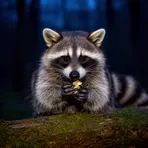
A small animal active at night with a black face mask that eats plants and animals


 1
1.4
1
1.4
A small wild animal with a black face mask and clever front paws that is active at night
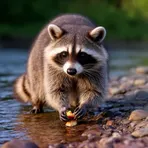
A medium-sized mammal from North America with a black face mask and clever front paws
Surface Forms
Morphology
The phrase is a straightforward adjective + noun composition: 'common' (typical/frequently occurring) modifies 'raccoon' (the animal), so the meaning 'a raccoon that is common' is directly derivable from the parts. This compositional pattern is cross-linguistically frequent and follows basic English syntax, so a B1 learner who knows both words will understand it.
Etymology
Common raccoon may come from a Native American word that sounded like 'arakun' and meant 'one who rubs' or 'scratches with its hands'. That image fits the animal, because raccoons use clever, hand-like front paws to wash and handle food, and common simply means the usual, widespread kind.