
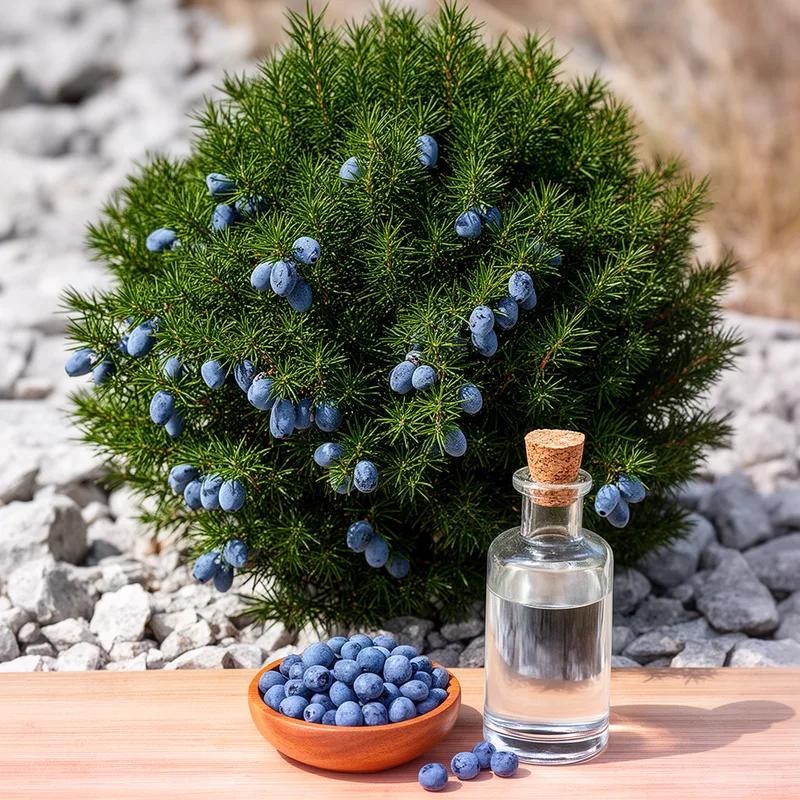
common juniper
- noun
- /ˈkɑːmən ˈdʒuːnɪpər/
- Many people use common juniper to flavor their gin.
Examples
-
In many regions, the common juniper can be found growing in rocky soils and open fields.
-
The common juniper produces small, blue, berry-like cones that can be used to flavor gin.
-
A common juniper can survive in harsh, rocky environments where few other trees grow.
-
Researchers studied the spread of common juniper populations across northern Europe.
-
The berries of the common juniper are an essential ingredient in many traditional gin recipes.
-
The common juniper is often found in rocky areas.
-
Gardeners often choose the common juniper for landscaping because of its attractive needle-like leaves.
Synonyms

 10
5.5
10
5.5

A small evergreen tree or shrub with needle leaves and berry-like cones used in gardens and to flavor gin
An evergreen bush or small tree with needle leaves and blue-black berries used to flavor gin
Surface Forms
Morphology
This is a straightforward adjective+noun composition: 'common' (typical, widespread) modifies 'juniper' (a type of shrub/tree), so the phrase denotes a juniper that is common or typical. A B1 learner who knows both words can reliably infer it refers to the widespread species (Juniperus communis) without knowing botanical details.
Etymology
Common juniper is named because this juniper is the most widespread kind in many northern lands: the small evergreen shrubs with blue, berry-like cones grow on hills, rocks and roadsides so often that people called them 'common'. That's why the simple name common juniper points to a very ordinary, widely found juniper whose berries are also used to flavor drinks like gin.