
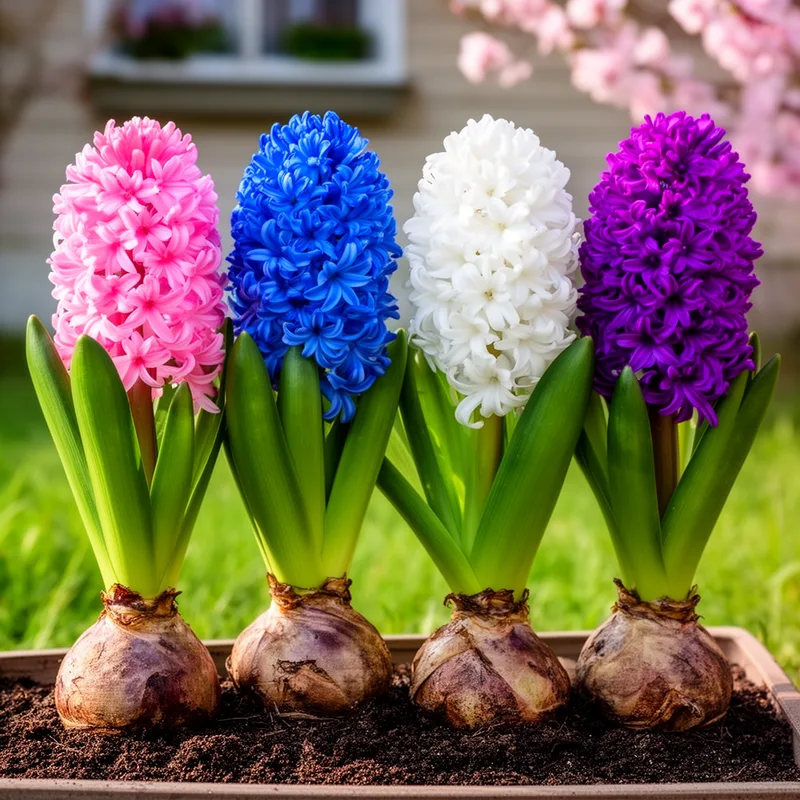
common hyacinth
- noun
- /ˈkɑːmən haɪˈsɪnθ/
- The common hyacinth blooms early in spring, filling gardens with a sweet scent.
Examples
-
She planted pink and blue common hyacinths along the walkway for vibrant color.
-
Many florists recommend the common hyacinth for brightening up window boxes.
-
The common hyacinth blooms beautifully in spring.
-
I planted a common hyacinth in my garden.
-
She planted pink and blue common hyacinths along the walkway for vibrant color.
-
The common hyacinth blooms early in spring, filling gardens with a sweet scent.
-
Many florists recommend the common hyacinth for brightening up window boxes.
Synonyms

 2
7.0
2
7.0

A spring bulb plant with many small fragrant blue, purple or white flowers
A garden flower grown for its strong smell and dense bell shaped blooms in white, pink or blue
A garden flower that grows several loose, delicate flower spikes from one bulb
Surface Forms
Morphology
The phrase denotes a hyacinth that is common or widely occurring, which is a straightforward combination of the adjective 'common' modifying the noun 'hyacinth'. This compositional adjective+noun pattern is regular and cross-linguistically familiar, so a B1 learner who knows both words can readily infer the meaning.
Etymology
Common hyacinth comes from hyacinth, a name tied to an old Greek story: one popular tale says a young man called Hyacinthus died and a sweet-smelling, colourful 'flower' grew where he fell. The word 'common' simply marks the usual garden kind people plant, so the name now means the familiar spring 'flower' grown for scent and colour.