

to come together
 35
2.1
35
2.1

- phrasal verb
- /kʌm təˈɡɛðər/
- It all came together when I saw you here.
- come together to form
Loading YouTube…
Watch on YouTubeWhen do things stuff come together to count as an object?
- When do things stuff come together to count as an object?
- These are Lego chains that when they stick, when two pieces come together, things are tough to pull apart.
- Oh, this is great time lapse watching it all come together.
- So that's how it came together.
- As I said, the starchy glue found in the pasta water makes it all come together.
- It is a brick path and it is comprised of a ton of little bricks that come together to take me forward.
- And those atoms come together into complexes and affect each other causally.
Examples
-
So once I had them all cut to size, it came together super quick and I think it looks fantastic.
-
It's in those moments that everything comes together or falls apart.
Fiction book (1996) -
Usually they come together, but not always.
-
I cannot believe it all came together like that.
-
Did you two come together?
-
Indeed, many of those who survived the attack came together just days later for a benefit concert.
-
Last week, the pieces of the puzzle came together.
-
Where all those streets come together right ahead is the true Five Points.
Fiction book (2002) -
All the jagged parts of my life have come together to form a complete and mystical whole.
-
After a long discussion, we decided to come together at the conference to share our ideas.
Synonyms
 ∞
2.1
∞
2.1
To join people or things into one group for a shared purpose
 ∞
1.0
∞
1.0
Connect two things so they become attached
 ∞
1.0
∞
1.0
Bring people, things, or information together in one place
 229
1.0
229
1.0
To come together at one point, like two rivers or walls
 152
3.3
152
3.3
To gather people in one place for a purpose
 122
1.8
122
1.8
To come together with friends to spend time
 118
2.8
118
2.8
To bring people together for a meeting or activity
 70
1.9
70
1.9
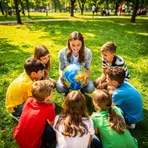
Come together in a group near someone or something
 65
3.7
65
3.7
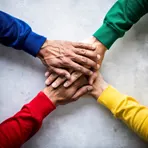
To bring people or things together into one group
 57
3.4
57
3.4
To work together with others to achieve a common goal
 51
5.5
51
5.5
To come together from different places and meet at one point
 50
3.4
50
3.4
Gather people or things and organize them to reach a goal
 45
5.7
45
5.7
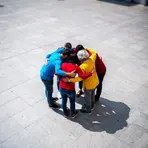
To bring people together for a formal meeting
 41
3.5
41
3.5
To come together in a small group or make people do the same
 40
6.8
40
6.8
To meet at an agreed time and place
 34
3.1
34
3.1
Join with other people to work together for a common purpose
 33
3.4
33
3.4
To join others to support the same cause
 30
4.1
30
4.1
To come together to support someone in a hard time
 30
4.1
30
4.1
To come together in a group for a reason
 26
5.9
26
5.9
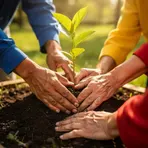
To come together or bring things together
 24
2.7
24
2.7
To work together with others for the same goal
 15
7.4
15
7.4
Come together to form one group or whole
 9
3.0
9
3.0
To join people, places, or things so they become connected
 8
3.3
8
3.3
To gather closely into a tight group
 5
3.1
5
3.1
To move or bring close together to form a small group
 5
3.8
5
3.8
To come together and support the same cause
 2
3.0
2
3.0
To stand or move closely in a group
 2
3.0
2
3.0
People and animals come together in a group for safety or shared interest
 2
3.9
2
3.9
Make people or groups work closely together as one
 1
3.5
1
3.5
To make people feel united by a shared goal or feeling


 1
9.2
1
9.2
To come together in one place, often for a meeting
 1
4.6
1
4.6
To join with others to reach a common goal
Antonyms


How Close

Surface Forms
Morphology
The meaning 'to unite or collaborate' is directly and compositionally derived from 'come' (arrive/approach) + 'together' (jointly), following a common English pattern where a motion/arrival verb plus 'together' indicates joining. This construction is cross-linguistically frequent and predictable, so a B1 learner who knows the constituent words should be able to infer the MWE meaning.
Etymology
Come together shows a simple picture. Two hands come toward each other and are together around a small bird, or petals close to protect a flower. So it means 'to move toward each other and meet'.