

comb-footed spider
- noun
- Specialized
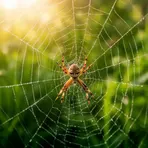
- The comb-footed spider can often be found spinning irregular webs in dark corners.
Examples
-
Scientists identified the specimen as a comb-footed spider due to the bristles on its hind legs.
-
Some species of comb-footed spider are known for their ability to catch prey much larger than themselves.
-
The comb-footed spider is often found in dark corners.
-
Have you ever seen a comb-footed spider up close?
-
The comb-footed spider is easily recognized by the unique bristles on its hind feet.
-
Many species of comb-footed spider can be found in gardens, where they help control pest populations.
-
The behavior of the comb-footed spider exhibits fascinating web-building techniques that attract prey.
Synonyms
 327
1.0
327
1.0

A small animal with eight legs that makes webs and often has a poisonous bite

A spider with a row of comb-like bristles on each back foot
Surface Forms
Morphology
comb-footed + spider
The compound is compositionally transparent: a B1 learner who knows 'comb' and 'foot/footed' can infer 'comb-footed' means 'having comb-like structures on the feet', and combining that with 'spider' yields 'a spider with comb-like bristles on its feet'. This follows a common English adjective+noun compounding pattern (and similar compounding exists in many languages), so the meaning is directly derivable from the parts.
Etymology
Comb-footed spider is named for the row of bristles like a comb on its hind feet. These comb-like hairs help the spider pull sticky silk to wrap and catch prey, so the name points to the special body part that helps it hunt.