
colloidal
 2
8.9
2
8.9

- adjective
- /kəˈlɔɪdəl/
- Specialized
- Decisions about the use of colloidal and crystalloid fluids and blood transfusion were made by each patient's attending anaesthetist or surgeon.
- colloidal gold
- colloidal particles
- colloidal vesicular
Loading YouTube…
Watch on YouTubeNext question, does silver or colloidal silver help with the cold?
- Next question, does silver or colloidal silver help with the cold?
- Different membrane components, compartments as you see here in the cell and even different colloidal structures, what we now call phase separations.
- It's like croissant, croissant or croissant, turmeric, colloidal silver.
Examples
-
I used Mesosilver .9999 pure colloidal silver to cure my son's GERD.
Blog text (31) -
Next question, does silver or colloidal silver help with the cold?
-
I'm going to start making colloidal silver just as soon as I figure out the right kit to do it properly.
Blog text (31) -
We add a a small amount of colloidal silver to the filter by brushing it on.
-
The black color is produced by a coating of a colloidal carbon suspension.
Academic text (1998) -
Because of their colloidal nature and negative surface charge, clays absorb water and metallic cations.
Academic text (1994) -
You were just explaining the nutritional value of ingesting minerals through a colloidal form which I couldn't agree more with.
-
The characteristic clay soil comprises uniform colloidal particles of kaolinite (between 0.2 and 2.0 µm).
Academic text (1994) -
Using colloidal silver is believed by some to enhance the immune system during colds.
-
Many lotions and creams use colloidal oatmeal to help relieve the symptoms of eczema.
Compounds

- Specialized

 1
5.8
1
5.8
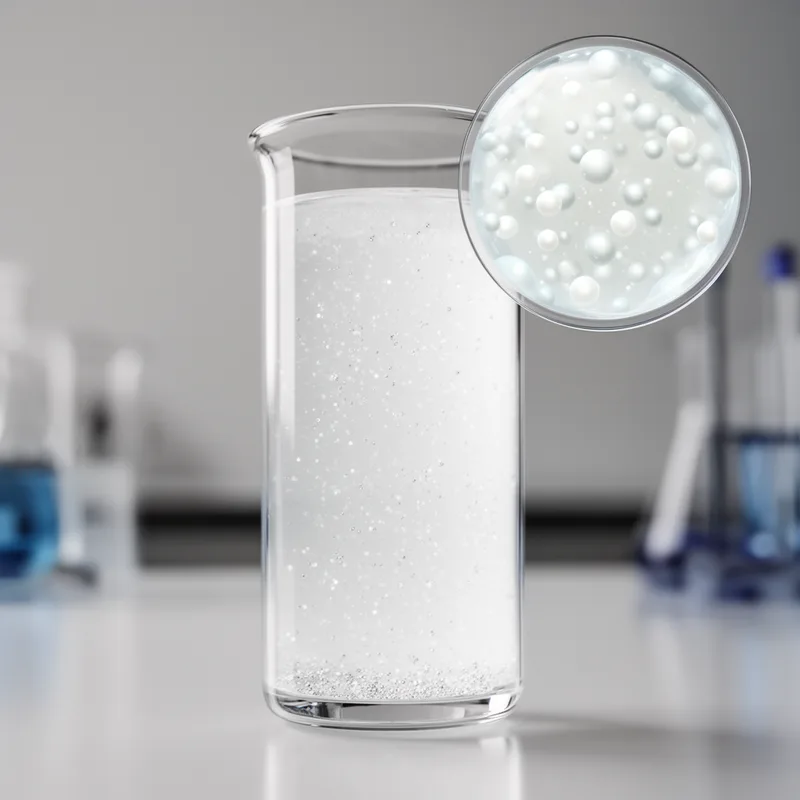
A liquid with very small solid particles spread evenly through it that do not sink
- Specialized
A soft, jelly-like substance with tiny particles mixed in that trap liquid

- Specialized
A mixture like milk where tiny solid bits stay spread in a liquid without dissolving
Surface Forms
Morphology
Etymology
Colloidal comes from the Greek word kolla meaning 'glue' and the ending -oid meaning 'like'. So a colloidal substance is 'glue-like' in that many tiny particles stay spread through another substance, which is why milk or some medicines look smooth but contain tiny bits.