
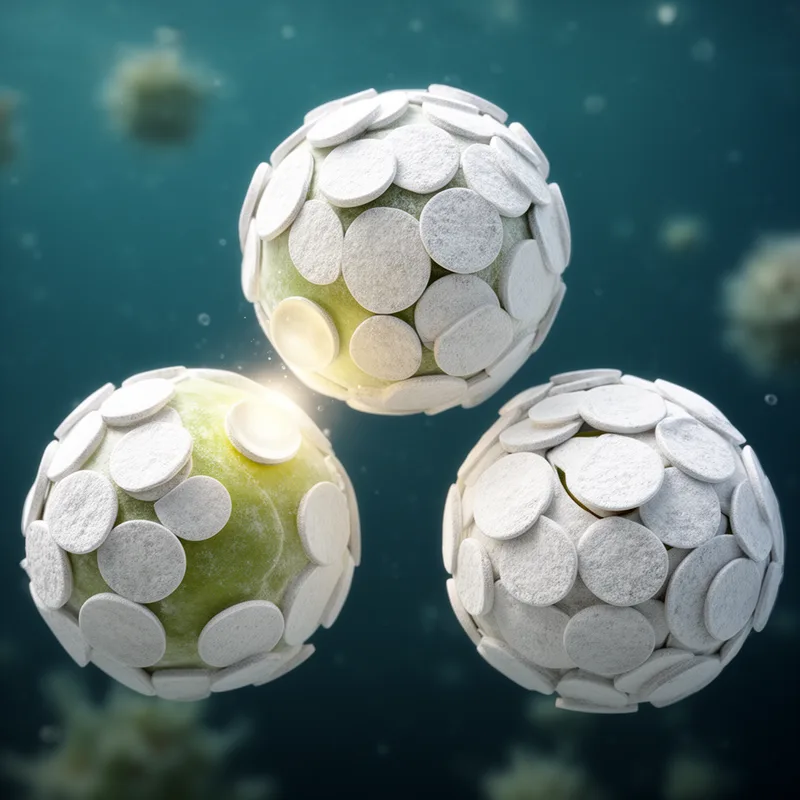
coccolith


 1
9.9
- noun
- /ˈkɒkəˌlɪθ/
- Specialized
- In coastal waters, scientists documented various algae species, some of which produced distinctive coccolith structures in their outer layers.
Examples
-
During the sediment analysis, the team discovered that coccolith remains were abundant, indicating a rich historical presence of these algae.
-
It contained numerous microfossils called coccoliths, naturally occurring as foreign particles in chalk, but not dissolved by water.
Academic text (2003) -
In addition, a putative decarboxylase with sequence homology to a coccolith-associated protein was significantly up-expressed.
Blog text (18) -
The researcher examined the samples under a microscope and identified several tiny, round coccolith plates that were produced by the algae.
Surface Forms
Morphology
coccolith = cocco + lith
The parts are Greek combining forms used in scientific coinage (cocco- 'berry/round' + -lith 'stone/plate') that are not recognizable standalone words to an average B1 learner, so the meaning is not derivable from familiar English vocabulary.
Etymology
Coccolith comes from the Greek parts kokkos ('grain' or 'berry') and lithos ('stone'), so it literally means a tiny round 'stone' or 'plate'. So, a coccolith is a very small round 'plate' made by certain algae, which is why the word is used for the tiny calcium plates found in ocean sediments.