

coca
 4
7.7
4
7.7

- noun
- /ˈkoʊkə/
- NSFW
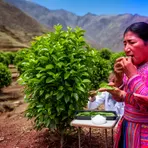
- In the Andes, many locals chew coca leaves for their stimulating effects during long hikes.
- coca leaves
- coca cultivation
- coca growers
Loading YouTube…
Watch on YouTubeOne is matcha green tea and the other is coca leaf.
- One is matcha green tea and the other is coca leaf.
- Forget about growing weed in the mountains, growing opium poppies, growing coca leaves, bringing chemicals, cook them up in the labs.
Examples
-
The coca farmers sell both coca leaves and processed cocaine paste to Colombian narcotics traffickers.
Academic text (1991) -
People here in Colombia have been chewing coca leaves since the beginning of time.
-
Do you know what else the coca leaves are used for?
Fiction book (1995) -
I follow a single coca leaf from the jungle to the streets of Miami.
-
He's been on a diet of coffee, tobacco and coca leaves.
-
Their jaws are chewing away on huge wads of coca leaves as they collect the harvest.
Fiction book (2001) -
My experience of coca chewing or tea is that it's, it's pleasantly mild, but it is far milder to me than a strong cup of coffee.
-
Morales and the coca growers emphasize an "Andean" heritage as intrinsic to Bolivian national identity.
Academic text (2004) -
The upper Huallaga Valley is one of the principal coca-producing regions in Latin America—indeed, the world.
Academic text (1993) -
Farmers often gather coca leaves to prepare for traditional ceremonies and boost their energy.
Compounds

- NSFW
A South American bush whose leaves are chewed in the Andes and make the drug cocaine
Surface Forms
Etymology
Coca comes from the Quechua and Aymara word kuka, the name native Andes people used for the plant and its leaves. So coca can mean the dried leaves that people chew for a small energy boost and it is where the drug cocaine comes from.