
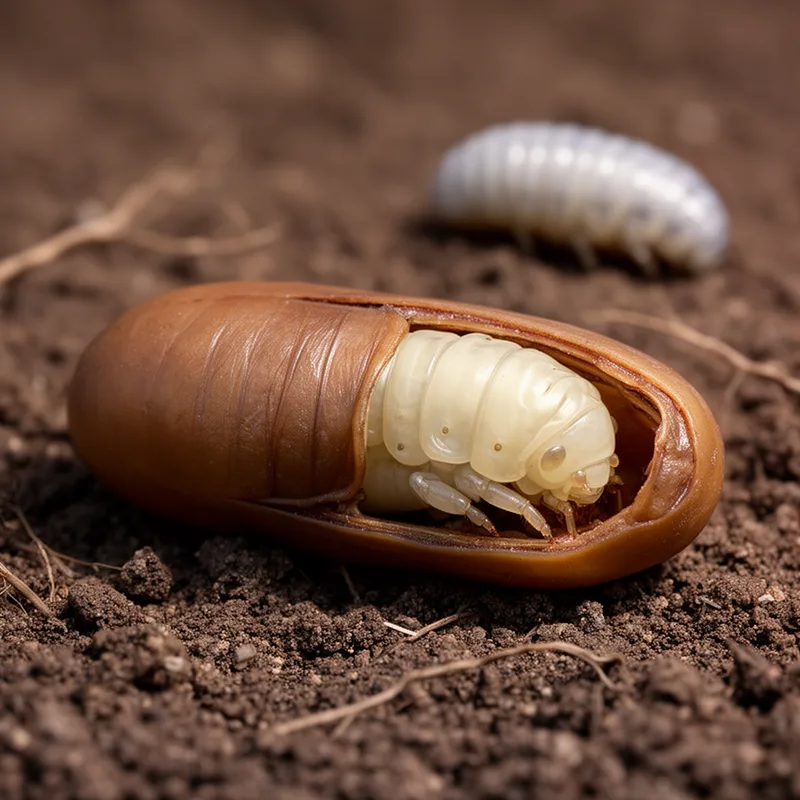
coarctate
- adjective
- /koʊˈɑrkteɪt/
- Specialized
- Entomologists distinguish coarctate pupae from other types based on the presence of a rigid case.
Examples
-
The fly undergoes a coarctate pupation, remaining within the last larval skin until adulthood.
-
Certain parasitic wasps develop a coarctate pupa inside their host.
-
The coarctate pupa is protected from predators.
-
Many insects undergo a coarctate stage during their lifecycle.
-
Certain parasitic wasps develop a coarctate pupa inside their host, which helps it survive.
-
Entomologists distinguish coarctate pupae from other types by examining their rigid outer case.
-
The insect enters a coarctate stage, where it is enclosed within the hardened skin of the last larval stage.
Surface Forms
Morphology
coarctate = coarct + ate
The word is formed from a Latin combining form + the suffix -ate and does not contain recognizable productive English base words, so learners cannot reliably infer the meaning from its parts.
Etymology
Coarctate comes from the Latin verb coarctare, which means 'to press together', with co- meaning 'together' and a root meaning 'tight'. So a coarctate pupa is literally 'pressed together' inside the hard skin of the last larval stage, which is why the word means 'enclosed in a rigid case'.

