
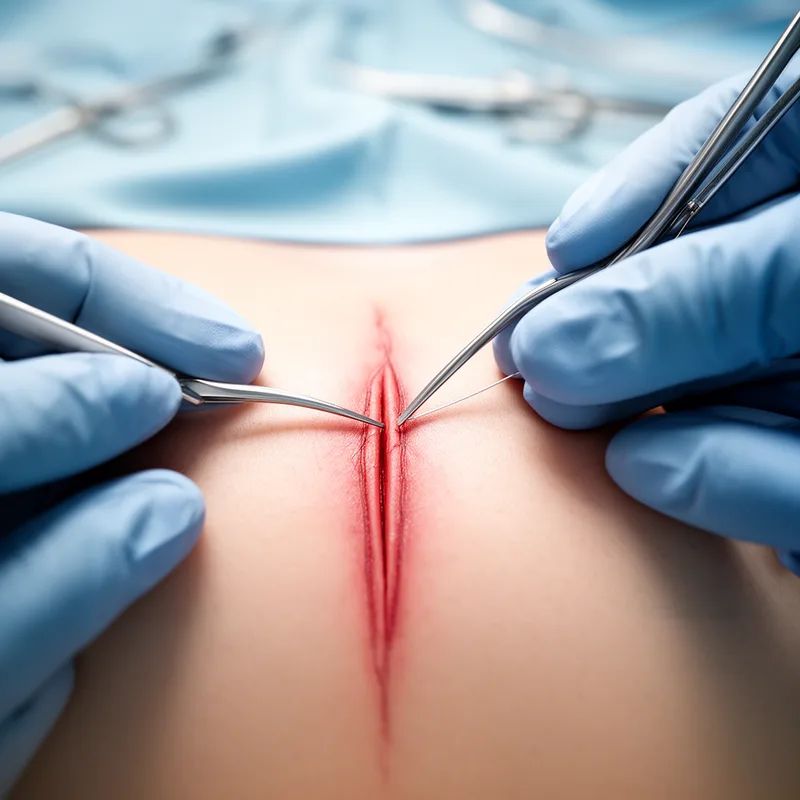
to coapt
- verb
- /koʊˈæpt/
- Specialized
 :
coaptar
:
coaptar
- The surgeon was careful to coapt the edges of the wound to ensure proper healing.
- coapt the dissection
- coapted end
Examples
-
Just a couple of stitches, if necessary, to coapt the gum margins as neatly as possible.
Blog text (32) -
Group C: nerve dissection only; Group P: nerve severed with microscissors after dissection, then coapted end-to-end;
Academic text (2015) -
Group C: nerve dissection only; Group P: nerve severed with microscissors after dissection, then coapted end-to-end; Group M: as in Group P, followed by enclosure of the nerve.
Academic text (2015) -
During the procedure, the doctor used sutures to coapt the tissue layers together securely.
-
After making the incision, the nurse helped coapt the overlapping skin edges for optimal recovery.
Synonyms

 14
7.3
14
7.3

To sew a cut or wound closed with thread
Antonyms


Surface Forms
Morphology
Etymology
Coapt comes from Latin parts co- ('together') and apt ('fit'), the same root you see in adapt and the word apt, so it means 'fit together'. That's why to coapt in surgery is to bring the edges of a wound tightly together so they can heal.