
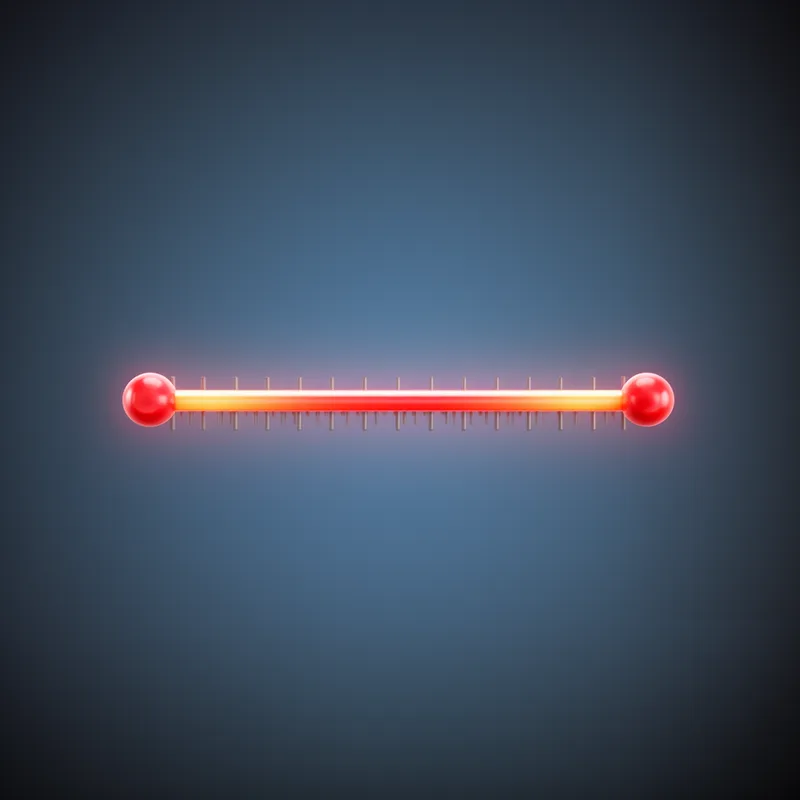
closed interval
- noun
- /kloʊzd ˈɪntərvəl/
- Specialized
- The statement for the elevator theorem is thus as follows: suppose that a function f takes on a discrete set of values throughout a closed interval [a, b], and that m is any number in a subset of discrete values between f(a) and f(b); then there is at least one number c in [a, b] such that f(c) = m (Fig. 2).
Loading YouTube…
Watch on YouTubeSo F is continuous continuous on the the closed interval Abab.
- So F is continuous continuous on the the closed interval Abab.
Examples
-
The closed interval from -5 to 5 contains all the numbers between -5 and 5, including the endpoints.
-
Suppose F is continuous on the closed interval, So on AB.
-
So F is continuous continuous on the the closed interval Abab.
-
Stated more formally, the intermediate-value theorem is often cast in the following manner: suppose that a function f is continuous throughout a closed interval [a, b] and that m is any number between f(a) and f(b); then there is at least one number c in [a, b] such that f(c) = m.
Academic text (1994) -
In calculus, we often examine functions over a closed interval [0, 1] to analyze their behavior.
-
When graphing the function, make sure to label the closed interval [a, b] to indicate that both endpoints are included.
Synonyms

A part of the number line that includes both end points
Antonyms

- Specialized
A set of numbers between two points that does not include the end points
Surface Forms
Morphology
The components 'closed' (not open) and 'interval' (a range between two points) give a clear cue that this is an interval that is somehow 'not open' and thus likely includes its limits, so learners can partially infer the meaning. However, the precise mathematical convention that 'closed' specifically means 'includes its endpoints' is technical and relies on domain knowledge rather than everyday compositional meaning, so the transparency is partial.
Etymology
Closed interval paints a simple picture: an interval, a part of the number line, with its two ends closed like shut doors. That 'closed' image explains why a closed interval means the end points are included, so the points at the ends belong to the interval.

