
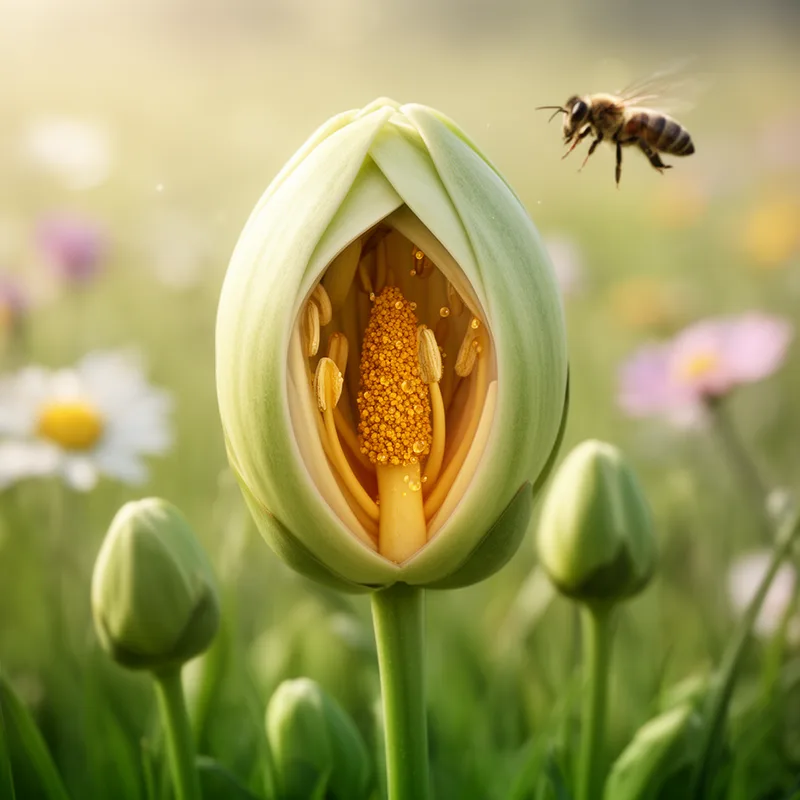
cleistogamous
- adjective
- /ˌklaɪstəˈɡæməs/
- Specialized
- The cleistogamous flowers never open and rely entirely on self-pollination.
Examples
-
Some grass species produce both cleistogamous and chasmogamous flowers for reproductive flexibility.
-
Many species of violets are known for their cleistogamous flowers.
-
Researchers found that cleistogamous plants often thrive in habitats with fewer pollinators.
-
The cleistogamous flowers of this plant ensure reproduction without reliance on pollinators.
-
The cleistogamous flowers of some plant species can reproduce independently without opening.
-
He observed that the cleistogamous flowers produced seeds without needing to attract pollinators.
-
In certain environments, cleistogamous plants have adapted to self-pollinate effectively.
Synonyms
Having flowers that self-pollinate without opening
Surface Forms
Morphology
cleistogamous = cleistogamy (opaque) = cleisto + gamy + ous
Although the adjective is regularly formed from a noun plus '-ous', the noun 'cleistogamy' is a specialised term built from Greek combining forms ('cleisto-' and '-gamy') that are not transparent to most learners.
Etymology
Cleistogamous comes from Greek parts cleisto- meaning 'closed' and -gamous meaning 'married', the same -gamous you see in monogamous. So a cleistogamous flower stays 'closed' and 'marries' itself, which explains why it self-pollinates without opening.

