

clammer
- noun
- /ˈklæmər/
- US
- Clammers would be dashing toward the shore in their speed buggies at breakneck speeds to outrun the waves.
Examples
-
Traveling at high speeds, they produced large waves that were a stability problem for hard clammers.
Academic text (1990) -
The remainder of the clams were shucked in the homes of the clammers.
Academic text (1990) -
Competition for the bottom with hard clammers.
Academic text (1990) -
Clammers were given permission by the courts to remove clams from leased oyster beds, with the proviso that they leave the oysters there.
Academic text (1990) -
In the 1800s and early 1900s, hard clammers complained that bottoms with clams were being leased to oyster planters.
Academic text (1990) -
On weekends, local clammers gather at the beach to dig for fresh clams to sell at the market.
-
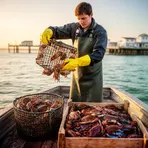
The clammer pulled his bucket full of clams from the water, ready to share his catch with friends.
-
During the clam harvesting season, many clammers set out early in the morning to catch the best clams along the shore.
Synonyms
 45
2.7
45
2.7

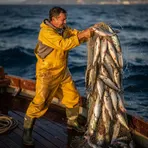
A person who catches fish for a living
 4
4.4
4
4.4
A person who catches shrimp for a living
 3
5.1
3
5.1
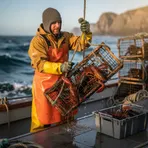
A person who catches lobsters for a living
 2
4.6
2
4.6
A person who catches fish by pulling a large net through the sea
 1
4.8
1
4.8
A person who gathers, grows, or sells oysters
 1
4.4
1
4.4
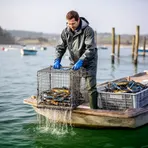
A person who catches crabs for work or fun

 1
6.4
1
6.4
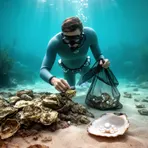
A person who dives underwater to collect pearls from oysters
 1
9.2
1
9.2
A person who dives to collect natural sea sponges
 1
4.4
1
4.4
A person who catches fish or animals using a net
A person who catches crabs to sell or eat

A person who catches lobsters for sale

People who catch or farm shrimp and the boats they use

A person who catches or sells fish
How Risky

Surface Forms
Morphology
Etymology
Clammer comes from the simple words clam (the shellfish) plus the ending -er meaning 'one who does', like baker or farmer, so a clammer is someone who digs or collects clams.