
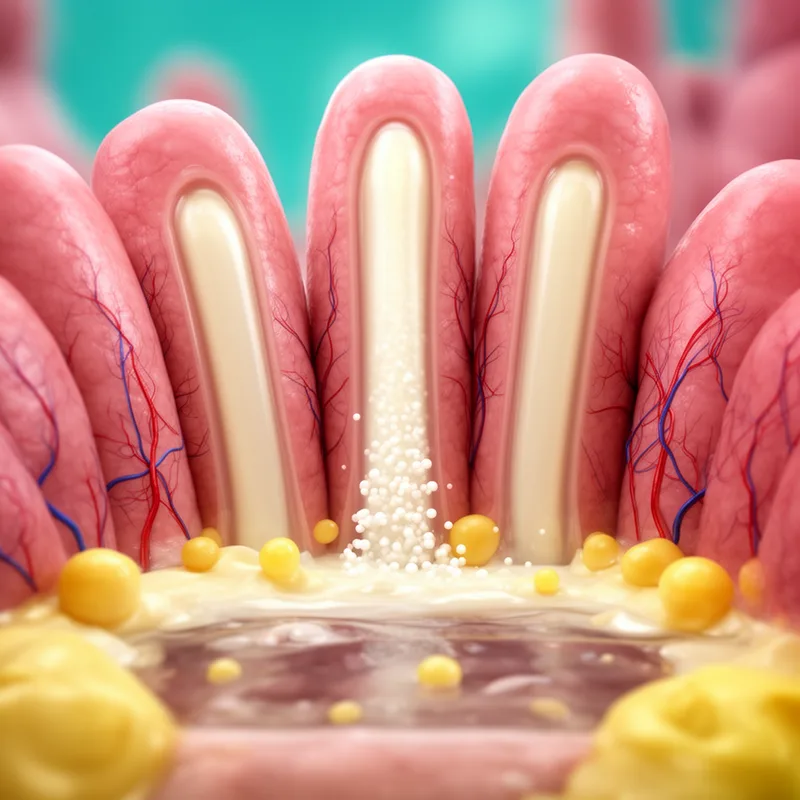
chylific
- adjective
- Specialized
- The chylific properties of the small intestine are essential for fat absorption.
Examples
-
Damage to chylific tissues can impair the formation of chyle.
-
In humans, the chylific function is essential for digestion.
-
Medical texts sometimes refer to the lacteals as chylific vessels.
-
The chylific process occurs in the intestines.
-
The chylific nature of the intestinal lining allows it to convert food into chyle.
-
For optimal digestion, chylific tissues in the digestive system must function properly.
-
Studies show that chylific activities in the gut are critical for absorbing nutrients.
Synonyms
Producing a milky fluid in the small intestine during digestion
Making the milky fluid that carries fats after digestion in the small intestine
Surface Forms
Morphology
Etymology
Chylific comes from the Greek root chyl- meaning 'chyle', the milky fluid that carries fat from the intestine. The ending -fic means 'making', as in prolific which means 'producing much', so chylific literally means 'making chyle' and is used for tissues that produce that milky fluid.

