
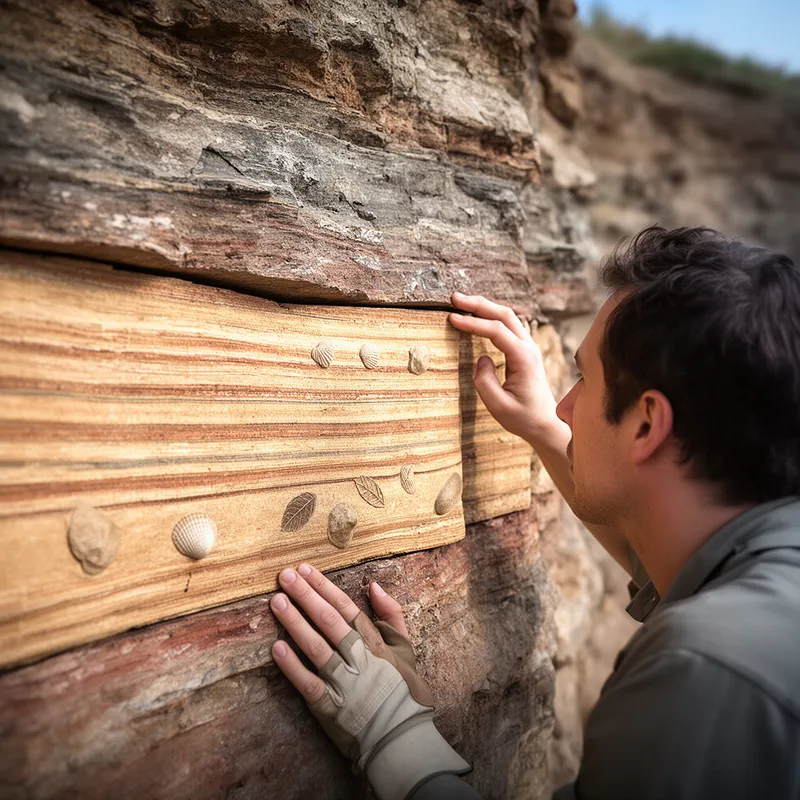
chronostratigraphic unit
- noun
- /ˌkrɒnoʊstrætɪˈɡræfɪk ˈjuːnɪt/
- Specialized
- The Jurassic is a well-known chronostratigraphic unit that has yielded many important fossils.
Examples
-
Scientists classify rock layers into chronostratigraphic units to study changes over geological time.
-
Many geologists study chronostratigraphic units to determine the age of rocks.
-
Finding the precise chronostratigraphic unit helps paleontologists date the fossils they discover.
-
The chronostratigraphic unit is essential for understanding Earth's history.
-
Finding the precise chronostratigraphic unit helps paleontologists date the fossils they discover.
-
Scientists classify rock layers into chronostratigraphic units to study changes over geological time.
-
The Jurassic is a well-known chronostratigraphic unit that has yielded many important fossils.
Surface Forms
Morphology
chronostratigraphic + unit
The noun phrase is compositionally regular (adjective + unit), so in principle the phrase means a 'unit' of whatever the adjective denotes. However, the adjective 'chronostratigraphic' is a technical, morphologically complex term built from Greek roots (chrono- 'time' + stratigraphic 'layering') and carries domain-specific meaning that a B1 learner would not reliably infer from everyday vocabulary. Because the overall structure is compositional but relies on specialist morphemes and background knowledge, it is only partially transparent to typical learners.
Etymology
Chronostratigraphic unit comes from parts: chrono meaning 'time', stratigraphic meaning 'rock layers', and unit meaning 'a piece'. That's why it means a part of rock layers that matches a certain time, used to tell how old rocks and fossils are.

