
chordate


 1
9.7
1
9.7
- adjective
- /ˈkɔrdɪt/
- Specialized
- I say in most chordate groups, brain size increases in evolution, but in a few groups it decreases.
Examples
-
Many researchers study chordate animals to understand the evolution of vertebrates.
-
The zooplankton include chordate jellyfishes known as "salps," which are among the fastest-growing multicellular organisms on the planet.
Academic text (2003) -
However, when you take chordate morphology, you expect—as I did—to have a discussion of evolution, a demonstration of known missing links, etc.
Blog text (23) -
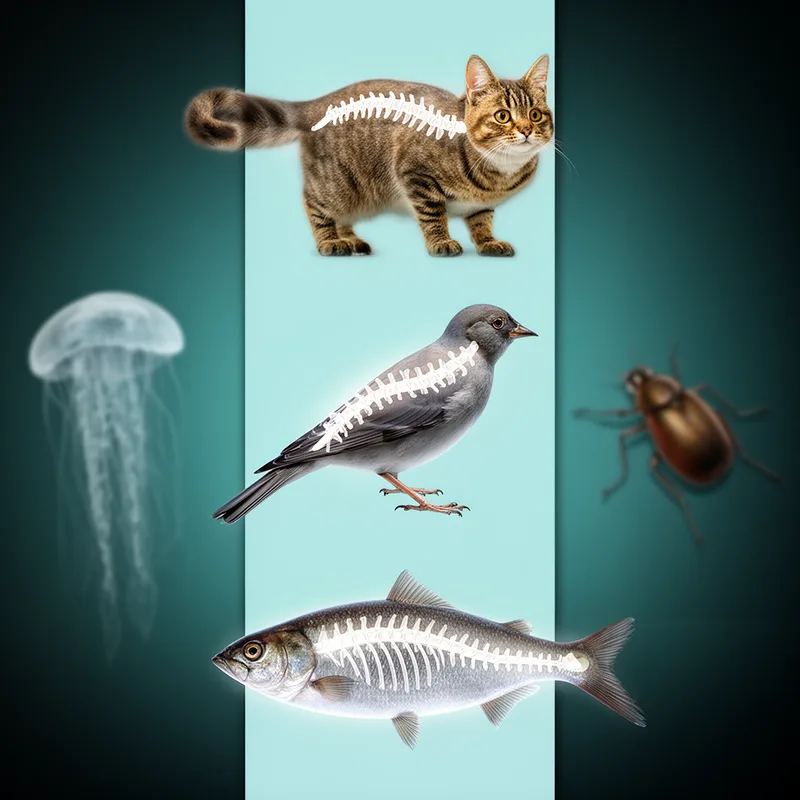
The characteristics of chordate species, like having a backbone, are fascinating to biologists.
-
In biology class, we learned that a chordate has a notochord at some point in its life cycle.
Surface Forms
Morphology
Etymology
The adjective chordate comes from the Greek root chord- meaning 'cord', and is like the English word cord, pointing to animals that have a 'back cord' at some stage. That's why we call fish, birds, and mammals chordate when we mean 'of or relating to' animals with that back cord.