
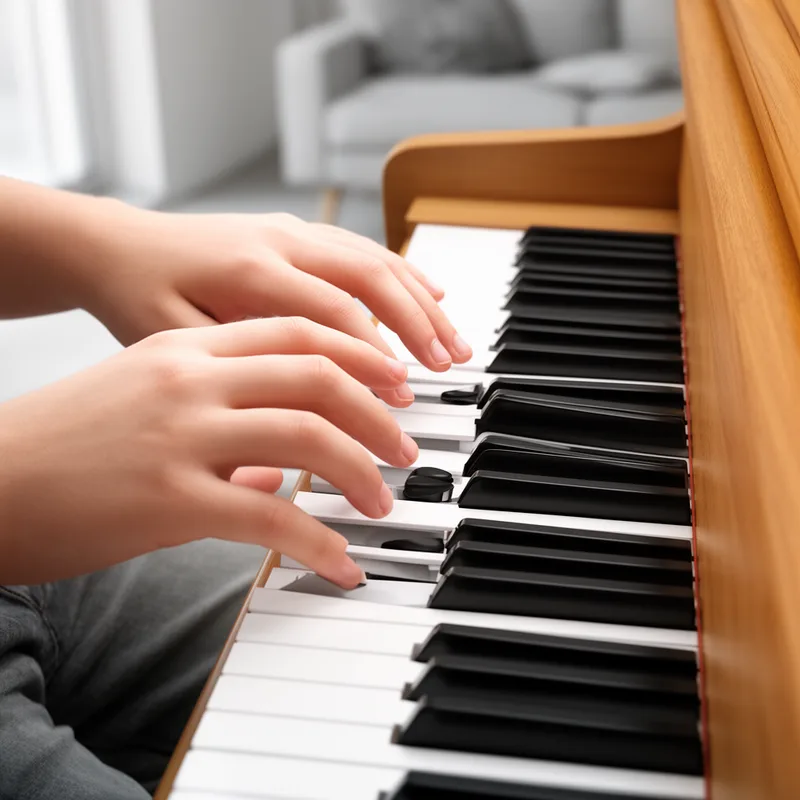
to chord


 1
4.4
1
4.4
- verb
- /kɔrd/
- His fingers slid from string to string, and his guitar slid from chord to chord while he sang cowboy songs.
Examples
-
She practiced daily to chord along with her favorite songs on the keyboard.
-
The size and smaller strings also make it easier to chord and strum than the guitar.
Academic text (1992) -
The verse is based on an I-V-I chord progression accompanied by guitar, bass, and tabla.
Academic text (2016) -
While one student plays I, IV, V7, I chord sequences, the other student creates a melody using the same I, IV, V7, I format.
Academic text (1993) -
This is intended to develop students' listening skills by constructing the whole from the parts; that is, by first teaching them to hear intervals, then chords, then chord progressions, and so forth.
Academic text (2006) -
Richard Nanes's Nocturnes of the Celestial Seas plays softly in the background, the rhapsodic, richly chorded Nocturne in C.
Fiction book (1998) -
He learned to chord simple songs on the piano for his first recital.
-
During the lesson, the teacher showed us how to chord effectively on the guitar.
Idioms


Compounds

- Specialized
1
7.3
A chord of three notes with one extra note seven notes above the first

- Specialized
A set of three notes played together, the main note and two higher notes, making a major or minor sound

- Specialized
A group of musical notes played together that sound tense and not smooth
How Many Notes
1
4.4

- Informal
1
8.4
Surface Forms
Etymology
Chord comes from the old word chordē, which meant 'string'. Musicians used to play groups of strings together, so to chord an instrument is to play several notes at the same time.