
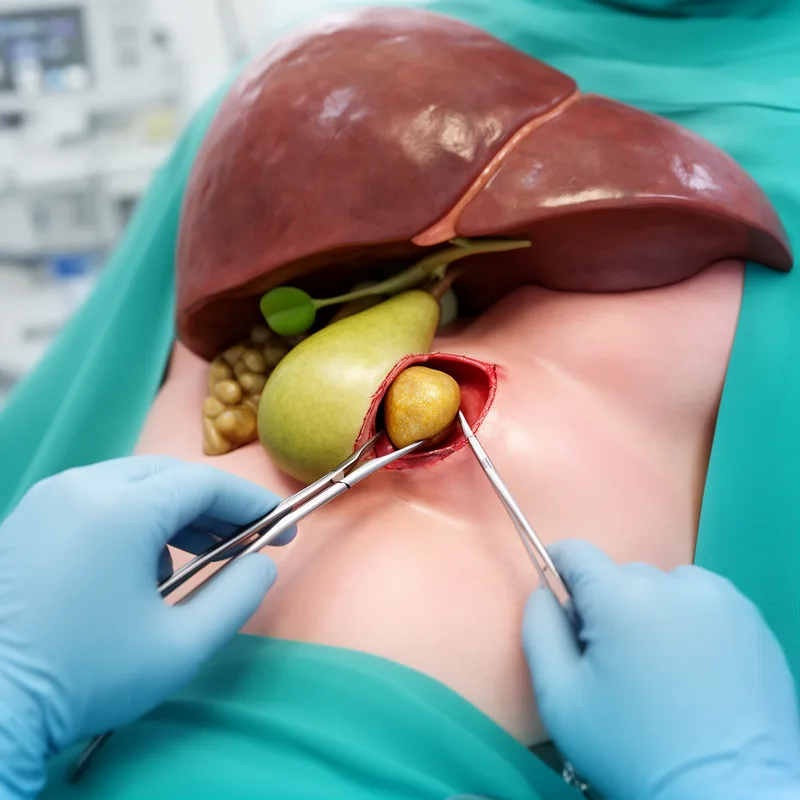
cholelithotomy
- noun
- /ˌkoʊlɪlɪˈθɑːtəmi/
- Specialized
- The surgeon performed a cholelithotomy to remove the patient's gallstones.
Examples
-
Recovery after a cholelithotomy is usually quicker than after a cholecystectomy.
-
A cholelithotomy may be recommended when gallstones cannot be dissolved or broken by less invasive methods.
-
Dr. Lee performed a cholelithotomy successfully.
-
Many patients recover quickly after a cholelithotomy.
-
The surgeon performed a cholelithotomy to remove the patient's gallstones.
-
Recovery after a cholelithotomy is usually quicker than after a cholecystectomy.
-
A cholelithotomy may be recommended when gallstones cannot be dissolved or broken by less invasive methods.
Surface Forms
Morphology
cholelithotomy = lithotomy (opaque) = chole + lith + otomy
The term is composed of Greek medical combining forms and names a specialized surgical procedure, which is not derivable by an average B1 learner from the parts.
Etymology
Cholelithotomy comes from three parts: chole- meaning 'bile' or 'gall', litho- meaning 'stone', and -otomy meaning 'cutting into'. So a cholelithotomy is a 'cut into' the gall to remove a stone, which explains why the word names the operation to take out gallstones from the gallbladder.

