
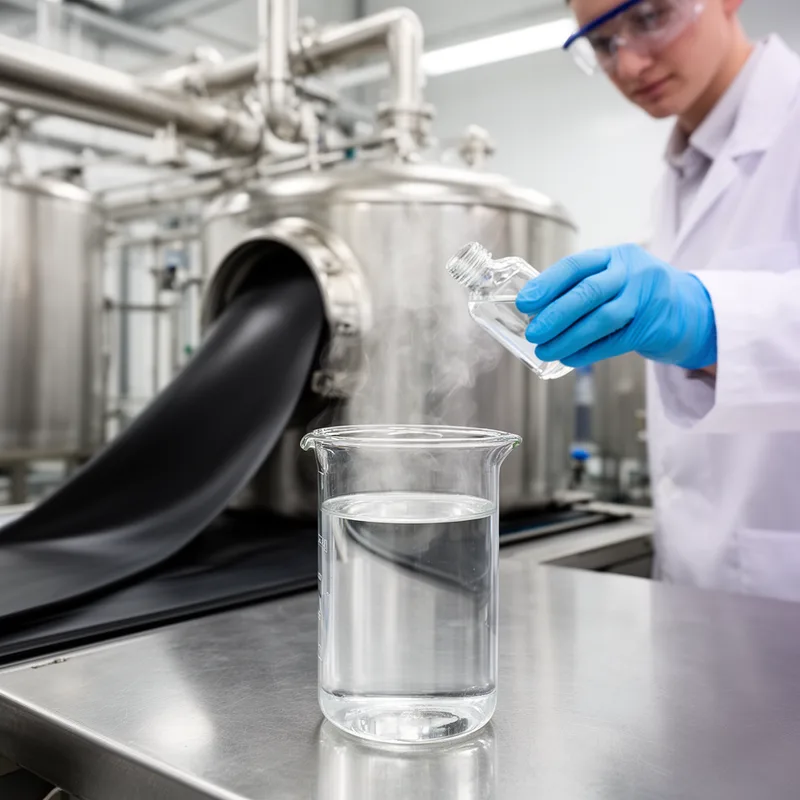
chloroprene
- noun
- /klɔːrəˈpriːn/
- Specialized
- The production of synthetic rubber relies heavily on chloroprene as a key ingredient.
Examples
-
During manufacturing, chloroprene is polymerized to form strong, flexible rubber.
-
A new EPA rule slashing chloroprene emissions has yet to be enforced at the Laplace plant.
-
Chloroprene is essential for creating durable materials like chloroprene for wetsuits.
Surface Forms
Morphology
chloroprene = chloro + prene
Although 'chloro-' indicates chlorine, 'prene' is a technical combining form (not a standalone English word) and the term is a specialized chemical name, so an average B1 learner cannot derive the meaning from common English components.
Etymology
Chloroprene comes from the parts chloro- meaning 'green', as in chlorine or chlorophyll, and -prene from isoprene, a small oily substance. So the name tells you this chemical is an isoprene changed by chlorine and explains why it is used to make neoprene rubber.

