
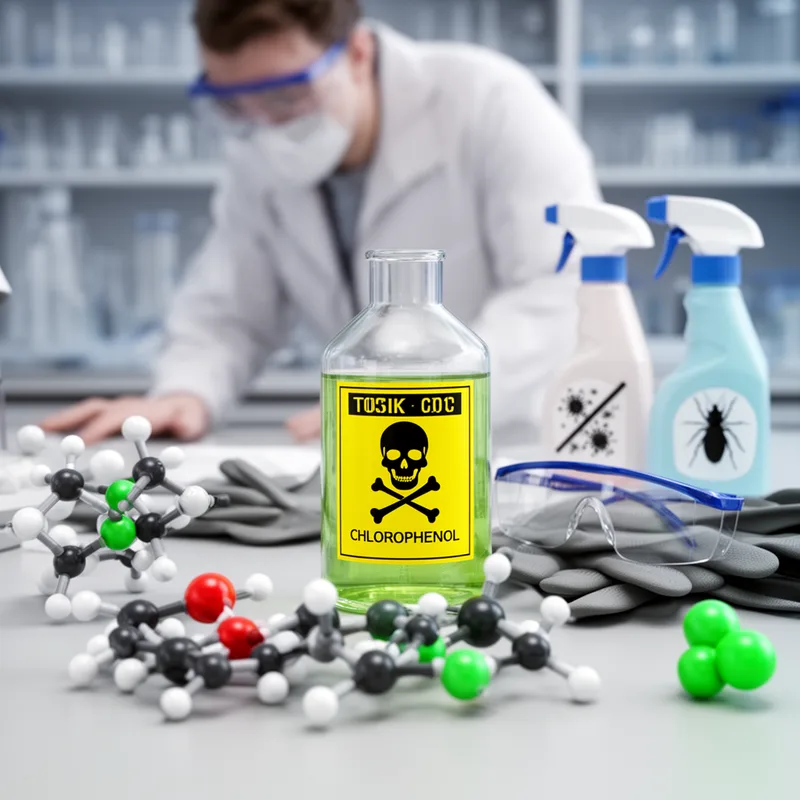
chlorophenol
- noun
- /ˌklɔːrəˈfɪnəl/
- Specialized
- This study looked at cancer mortality in 18,390 production workers or sprayers exposed to chlorophenoxy herbicides and/or chlorophenols.
Examples
-
Alexander and Lustigman (1) and Baker and Mayfield (2) reported that chemical structure had a notable effect on microbial decomposition of chlorophenols and other selected pesticides.
Academic text (1993) -
Now suppose what you want is meta chlorophenol, hydroxybenzene, that's the one you want to make.
-
Similar trends were not observed in any analyses of STSs and phenoxy acids or of either cancer in connection with chlorophenol exposure.
Academic text (1993) -
Relative risk estimates ranged from 1.3 for any "potential" exposure to 1.6 for exposures ("definite or probable" for phenoxy acids, "potential" for chlorophenols) lasting more than one day and occurring more than five years prior to diagnosis.
Academic text (1993) -
The chlorophenol compound is highly effective in reducing harmful bacteria in laboratory settings.
-
Scientists discovered that chlorophenol can be utilized in the formulation of certain pesticides.
-
Due to its strong chemical odor, chlorophenol is often used in disinfectants and cleaning products.
Surface Forms
Morphology
Etymology
Chlorophenol brings together chloro- and phenol. The chloro- part comes from a Greek word meaning 'green' and appears in words like chlorine and chlorophyll, and phenol is a simple chemical with a sharp smell, so chlorophenol is a 'phenol with chlorine', which helps explain its strong odor and use in disinfectants.

