
chlorinator


 1
4.8
- noun
- /ˈklɔːrɪneɪtər/
- Specialized
- For systems discharging into injection wells, a special feature of the Florida Keys, the required treatment includes a sand filter and chlorinator after the ATU.
- chlorinator system
Examples
-
Wallace & Tiernan Products began in 1913 with the invention of the world's first chlorinator by Charles Wallace and Martin Tiernan.
Academic text (2002) -
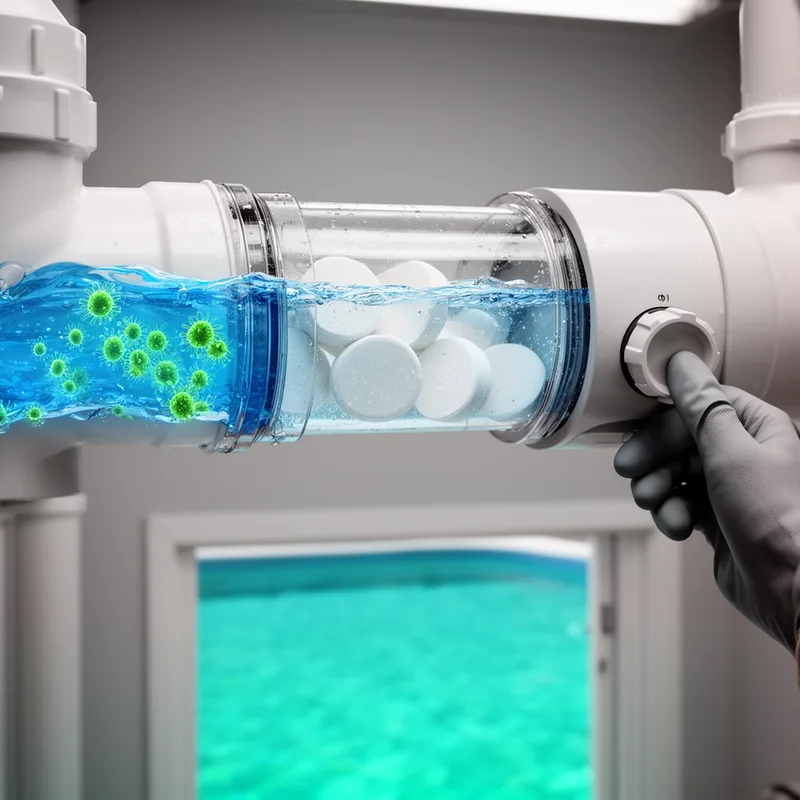
The Tablet Chlorinator System uses calcium hypochlorite tablets in an erosion feeder to produce a controllable amount of chlorine.
Academic text (1997) -
The municipal system also had a chlorinator installed to provide a residual disinfectant to the system.
Academic text (1997) -
The oversized chlorinators tended to cause cycling in the control system.
Academic text (1998) -
PHOTO (COLOR): Chlorinators replaced existing systems that were technologically outdated and in disrepair.
Academic text (1997) -
Two new chlorinators replaced the previously oversized chlorinators that tended to overfeed, thus wasting chemicals and increasing costs.
Academic text (1998) -
Two new chlorinators replaced the previously oversized chlorinators that tended to overfeed, thus wasting chemicals and increasing costs.
Academic text (1998) -
For example, a large or abrupt deviation from the set point in the residual controller caused the oversized automatic valve in the chlorinator to overcorrect, thus producing a large deviation in the opposite direction.
Academic text (1998) -
PHOTOS (COLOR): The old system consisted of chlorinators, gas cylinders, water supply piping, injectors, a scale, a chlorine detector, as well as a fresh air intake and exhaust.
Academic text (1998) -
The City has confirmed that all six drinking water source wells now have chlorinators installed.
Surface Forms
Morphology
chlorinator = chlorinate (transparent) = chlorinate + or
Formed by adding the agentive suffix '-or' to the clear verb 'chlorinate', yielding a device or agent that chlorinates.
Etymology
The word chlorinator comes from the part chloro-, from the Greek word chloros meaning 'green'. So, because chlorine is the chemical used to kill germs in water, a chlorinator is a device that adds chlorine to keep water clean.