
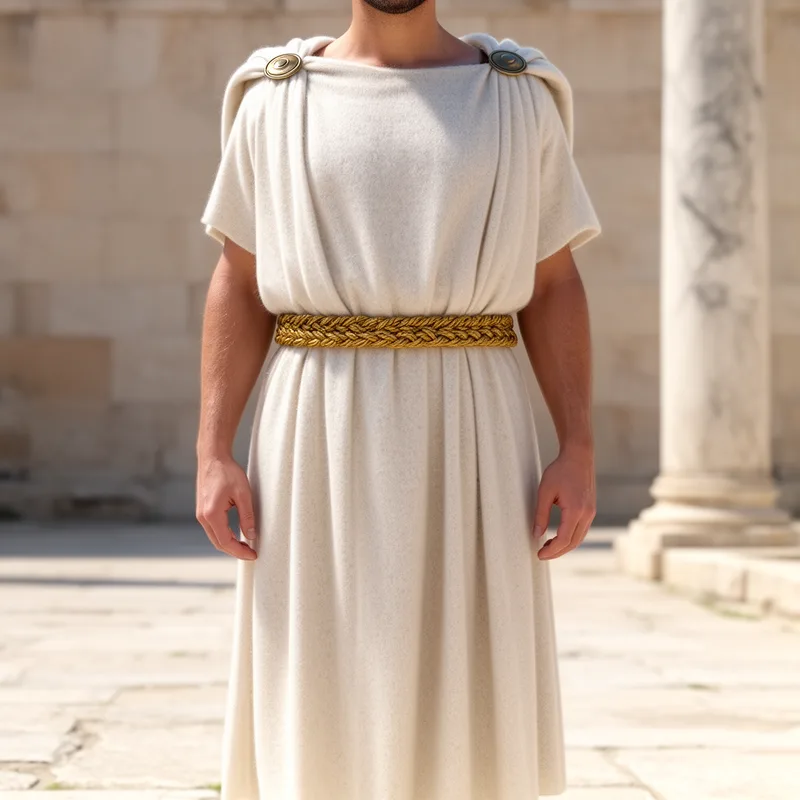
chiton
- noun
- /ˈkaɪtən/
- Archaic
 :
quitón
:
quitón
- In ancient Greece, men typically wore a chiton that was belted at the waist and fastened at the shoulders.
- a chiton on a girl
- wearing a chiton
Examples
-
Cook, who had not seen the original, refers to them as "female (?) dancers," stressing the query; both wear short chitons.
Academic text (2014) -
The Syracusans set up a statue of him wearing a tunic (the word in Greek is chiton) without a belt; this was a memorial to his popularity with the public and a lesson to future rulers.
Academic text (2014) -
Finally, the jeweled clasps meant to "close" Eucharis's chiton at the side also offer glimpses of flesh through revealing separations in the drapery.
Academic text (2000) -
In the lower register, below the relief of banqueters reclining on couches, are several female dancers wearing long garments, which are also described by Benndorf as chitons, dancing in front of an aulos player.
Academic text (2014) -
The woman adjusted the folds of her chiton, ensuring it draped elegantly over her figure.
-
During the festival, both men and women donned their finest chitons to celebrate in style.
Synonyms

 41
4.8
41
4.8

A loose outer shirt, sometimes sleeveless, that reaches the hips or knees
How Warm

Surface Forms
Etymology
Chiton comes from the Greek khitōn, which means 'tunic'. In ancient Greece a chiton was a simple wool tunic fastened at the shoulders and belted at the waist, so the old word directly describes the garment we mean today.