
chine
- noun
- /tʃaɪn/
- UK
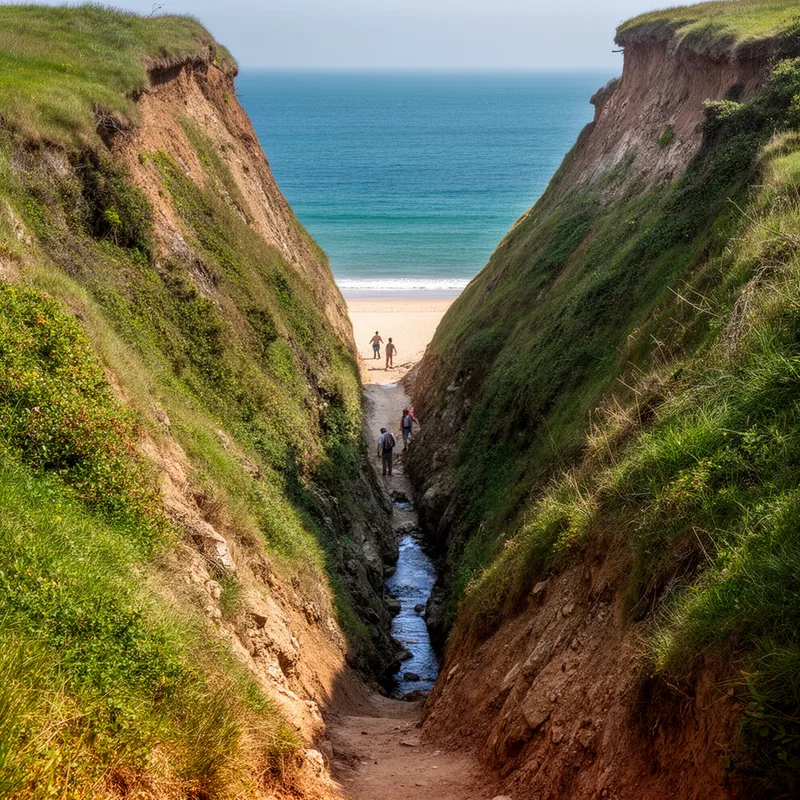
- The path leading down to the beach follows the steep slopes of a chine filled with dense vegetation.
Examples
-
But it is a very nice evocation of the landscape of Bournemouth, with its chines and its views of Purbeck and the Isle of Wight, in a distinctive era when it
Blog text (24) -
Branksome Chine is a popular spot for tourists, offering stunning views of the coastline.
-
Motorways are littered with directions to theme parks such as Gulliver's Kingdom, with Blackgang Chine, and of course Camelot.
Academic text (1990) -
The hikers ventured into the steep-sided valley known as the chine, surrounded by lush greenery.
Synonyms

 46
5.8
46
5.8

A deep narrow valley with steep sides made by a river
 32
5.3
32
5.3
A deep narrow valley with steep rocky sides, often with a river
 9
9.5
9
9.5
A narrow valley with steep sides and a small stream
 1
9.5
1
9.5
A deep narrow valley with steep sides and a stream running through it

A deep gully made by water after heavy rain

A steep rocky bank beside a river or stream
Compounds

- Specialized

 1
8.8
1
8.8
A thin lightweight silk fabric with a slightly crinkled surface used for dresses and blouses
How Steep

Surface Forms
Etymology
Chine for a steep valley comes from the same root as French échine 'back', and it describes a narrow, deep cut in the land that looks like a back or spine leading down to the sea.