
chinampa


 1
9.9
- noun
- /tʃɪˈnɑːmpə/
- Specialized
- The raised fields followed the same principle as the "chinampas" of central Mexico, except that they were not built out into lakes.
- chinampa system
Examples
-
This is obvious in the satellite town of Xochimilco, south of the city, where the practice of chinampa agriculture (irrigated raised fields) is quickly disappearing because of the descending water table and the contamination of the canal waters.
Academic text (1997) -
With much of the forests cut, most of the chinampa lands turned into urban developments, and practically all of the lakes dried up, the supply of raw materials and energy generated within the basin is insufficient for even a small fraction of its 18 million residents.
Academic text (1997) -
35. The use of wetlands for agriculture did not always involve the chinampa system.
Academic text (1992) -
A large-scale "chinampa" system, similar to the polders in the Netherlands, is established and maintained in the southern region of the basin of Mexico.
Academic text (1992) -
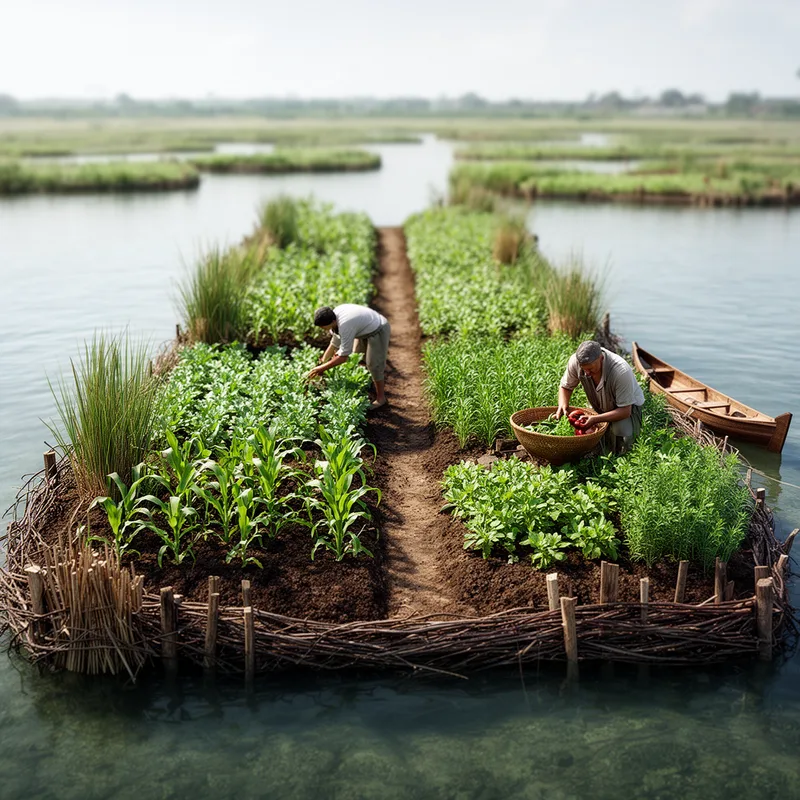
Within the surrounding lakes, Aztec people built islands called chinampas for growing crops.
-
Growing populations prompted the construction of an extensive network of chinampas—raised beds for crops surrounded by water-filled ditches—throughout the valley starting in the second century A.D.
Academic text (2006) -
The Aztecs created chinampas to grow crops on the shallow lake beds surrounding their cities.
-
Today, farmers in Mexico continue to use chinampas as a traditional method for cultivating vegetables.
-
In ancient times, the chinampas provided a sustainable way for the Aztecs to maximize their agricultural output.
Surface Forms
Etymology
The word chinampa comes from the Nahuatl language of central Mexico, from the word chinamitl, which meant a raised 'planting bed' or small island in the water. So a chinampa is an artificial island used for farming, like a little floating garden the Aztecs built to grow crops.