
chimera
 5
9.9
5
9.9

- noun
- /kɪˈmɪrə/
- Literature
- The first epoch is personified by Bellerophon overcoming the Chimera, signifying the creation of the first settlements.
- a chimera monster
Loading YouTube…
Watch on YouTubeIt has demons and chimera and angels.
- It has demons and chimera and angels.
Examples
-
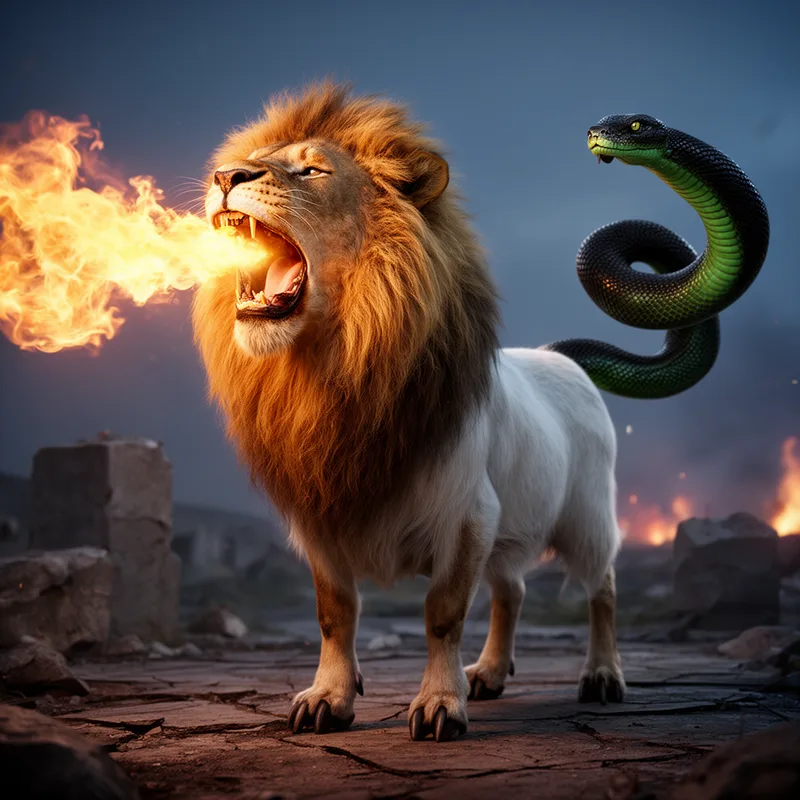
In the myth. Bellerophon was a prince who killed the Chimera, a monster with the head of a lion and the tail of a serpent who plagued the ancient world.
-
The Chimera belches fire because flint was discovered during the first epoch.
Academic text (2005) -
A chimera suddenly flits through the night; it sends me to the floor.
Fiction book (1990) -
From a symbolic point of view, the Glofish represents the chimera: a monster of legend, a cross-species hybrid, an amalgamation of body parts from different animals.
Academic text (2004) -
In Greek mythology, the chimera embodied all things domestic and motherly, a goat who nurses young and cares for the home front and simultaneously possesses the qualities of a beast."
-
No horses in Chichen Itza, but the dreaded Chac Mool possessed the countenance of a Chimera, half-human, half-horse.
Fiction book (1997) -
In Greek mythology, the chimera is often described as a fearsome monster that breathes fire and has the head of a lion, the body of a goat, and the tail of a serpent.
-
The hero Bellerophon bravely faced the chimera, a creature that terrorized the land with its terrifying appearance and fiery breath.
-
Legends tell of the chimera, a mythical beast with the attributes of multiple animals, symbolizing a formidable challenge for anyone who dared to confront it.
Surface Forms
Etymology
Chimera comes from the old Greek myth of the Chimera, a fire-breathing monster made of different animals (a lion's head, a goat's body and a serpent's tail). So the word still names that strange mixed creature.