
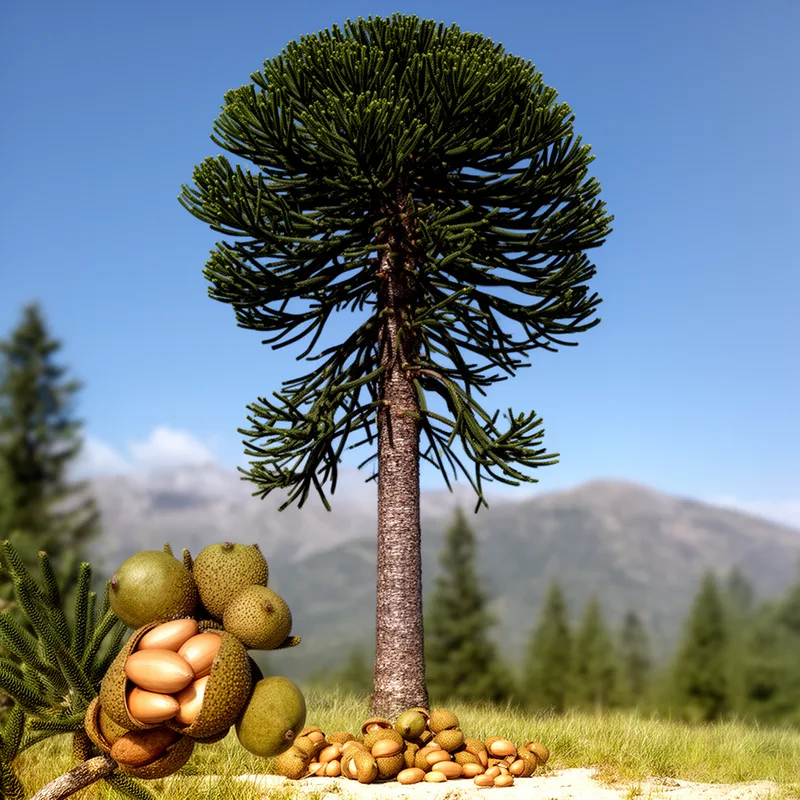
chile pine
- noun
- /ˈtʃɪleɪ paɪn/
- UK
- In Chilean forests, the chile pine produces nutritious nuts eaten by wildlife and humans alike.
Examples
-
The chile pine stands tall and majestic, its unique branches twisting skyward.
-
Gardeners sometimes plant a chile pine for its striking, unusual appearance.
-
The chile pine is known for its unique shape.
-
Many chile pines grow in the Andes mountains.
-
In Chilean forests, the chile pine produces nutritious nuts eaten by wildlife and humans alike.
-
Gardeners sometimes plant a chile pine for its striking, unusual appearance.
-
The chile pine stands tall and majestic, its unique branches twisting skyward.
Synonyms
A large South American tree with spiny branches and edible seeds
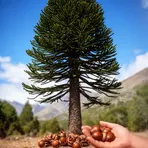
A large evergreen tree from Chile and Argentina with spiral branches and edible seeds
Surface Forms
Morphology
The compound combines a place-name/adjective 'Chile' with the noun 'pine', so a learner who knows both words can readily infer it refers to a pine tree from Chile. Specific botanical details (e.g. monkey puzzle, edible nuts) are extra encyclopedic information but do not prevent the overall meaning being transparently derived from the constituents.
Etymology
Chile pine takes its name from its home and its look: chile because it comes from Chile, and pine because it is a tall evergreen tree. One popular story says people called it the 'monkey puzzle tree' because its tight, spiky branches would leave a monkey 'puzzled', and that image helps explain why the name refers to a strange, twisting tree that produces edible nuts.

