
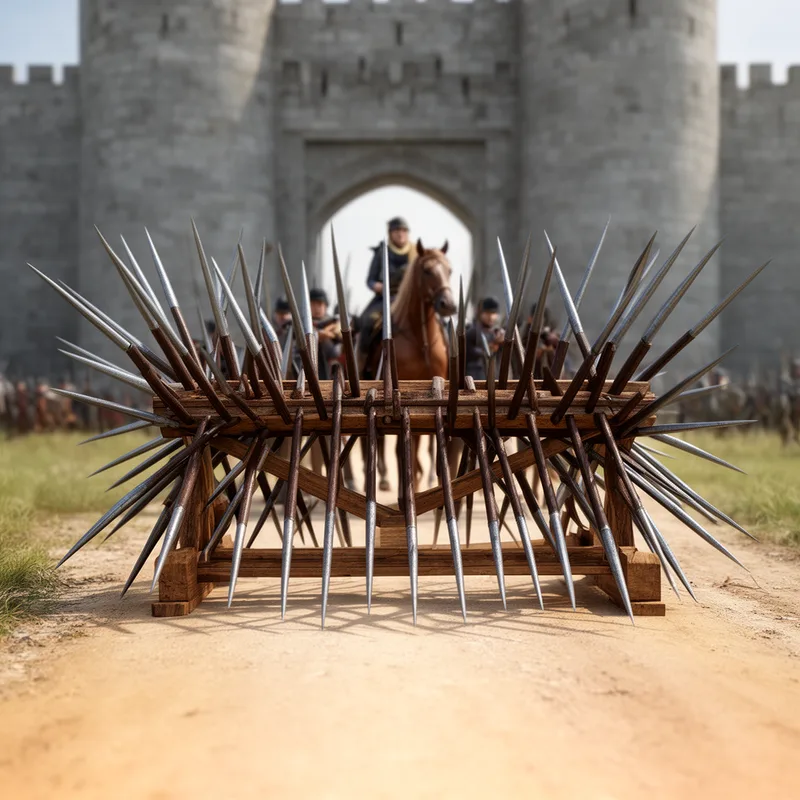
cheval-de-frise
- noun
- /ʃəˌvæl də ˈfriz/
- Specialized
- The soldiers erected a cheval-de-frise to protect their position from cavalry charges.
Examples
-
During the siege, engineers placed a cheval-de-frise at the city gates to prevent enemy breaches.
-
Museum visitors can see a restored cheval-de-frise from the Revolutionary War era.
-
The army set up a cheval-de-frise to protect the camp.
-
During the battle, the soldiers used a cheval-de-frise as a defense.
-
During the siege, engineers placed a cheval-de-frise at the city gates to prevent enemy breaches.
-
The soldiers erected a cheval-de-frise to protect their position from cavalry charges.
-
Museum visitors can see a restored cheval-de-frise from the Revolutionary War era.
Synonyms
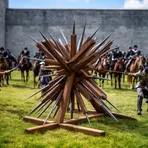
A movable wooden frame with spikes that stops soldiers or horses
How Protective


Surface Forms
Etymology
Cheval-de-frise comes from the French parts cheval ('horse') and frise (linked to Frisia), because the spiked frame was meant to stop horses. So a cheval-de-frise is a movable frame with spikes placed to block soldiers on horseback or other attackers.