
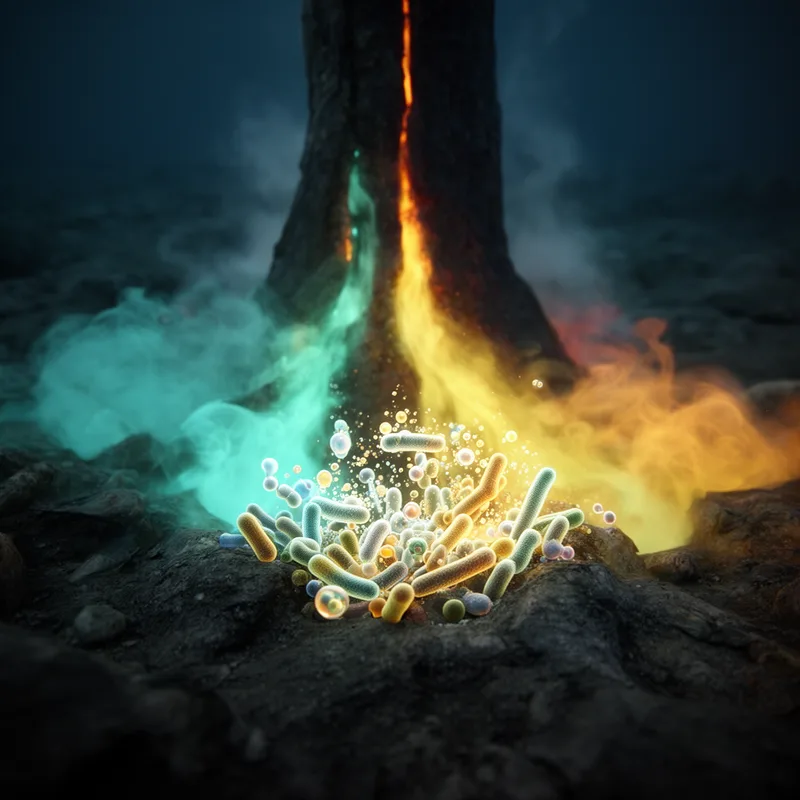
chemoautotrophic


 1
9.9
- adjective
- /ˌkiːmoʊˌɔːtəˈtrɒfɪk/
- Specialized
- Scientists study chemoautotrophic organisms that thrive in extreme environments without sunlight.
Examples
-
The chemoautotrophic bacteria in the ocean depths derive energy from chemicals instead of sunlight.
-
Functional groups 1-5 are heterotrophic, and groups 6-9 are chemoautotrophic.
Academic text (2000) -
Some bacteria are chemoautotrophic, using inorganic substances to generate their own food.
Synonyms
 1
7.7
Describing living things that make food from chemicals instead of sunlight
Surface Forms
Morphology
chemoautotrophic = autotrophic (semi-transparent) = chemo + auto + troph + ic
The word is built by adding the scientific prefix 'chemo-' to 'autotrophic', but the full term is specialized technical vocabulary rather than everyday transparent English.
Etymology
Chemoautotrophic breaks into chemo- ('chemical'), auto- ('self', as in automatic) and -trophic ('feeding' or 'making food'). So a chemoautotrophic organism 'feeds itself' using chemicals for energy, which is why such bacteria can live without sunlight.