

chelate compound
- noun
- /ˈkiːleɪt ˈkɒmpaʊnd/
- Specialized
- Researchers synthesized a new chelate compound that can remove toxic metals from wastewater.
Examples
-
The stability of a chelate compound depends on the strength of the bonds formed between the ligand and the metal ion.
-
Many chelate compounds are used in medical applications.
-
The antibiotic EDTA is a well-known chelate compound used to bind metal ions in the body.
-
A chelate compound can stabilize metal ions effectively.
-
Researchers synthesized a new chelate compound that can remove toxic metals from wastewater.
-
The antibiotic EDTA is a well-known chelate compound used to bind metal ions in the body.
-
The stability of a chelate compound depends on the strength of the bonds formed between the ligand and the metal ion.
Synonyms


 1
9.9
1
9.9
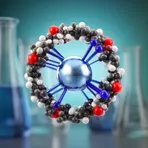
A compound where a metal ion is held by an organic molecule at two or more points forming a ring

A central metal atom bonded to surrounding atoms or small groups
Surface Forms
Morphology
Given the constituent meanings, the phrase is compositionally predictable: 'chelate' specifies a metal-binding motif (metal ion bound at multiple sites) and 'compound' denotes a chemical substance, so a 'chelate compound' is simply a compound that contains or forms chelate bonds. Although the vocabulary is technical, a learner who already knows both constituent definitions can transparently infer the MWE meaning.
Etymology
The name chelate compound comes from a Greek word meaning 'claw'. The part chelate gives a clear image: some atoms wrap around and 'grab' a metal like a claw to make a ring and hold it tightly, so the name explains that the metal is strongly bound.