
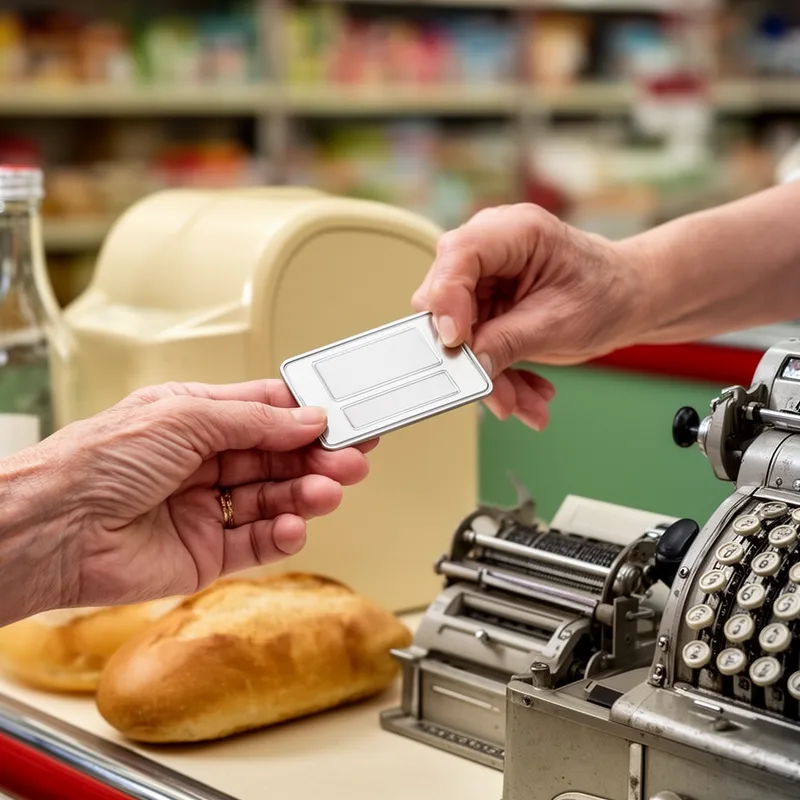
charge plate


 1
8.4
1
8.4
- noun
- /ˈtʃɑrdʒ pleɪt/
- Archaic
- She used her charge plate for the first time at the store.
Examples
-
In the 1950s, my grandmother paid for groceries with a charge plate issued by the department store.
-
Few people today remember using a charge plate before credit cards became widespread.
-
The old charge plate in the museum looked surprisingly modern for its time.
-
I found an old charge plate in my grandfather's drawer.
-
He used his charge plate to pay for dinner at the restaurant.
-
The store accepted her charge plate for the purchase of a new dress.
-
In the 1950s, many shoppers relied on a charge plate to make convenient payments.
Synonyms
 711
1.0
711
1.0
A small plastic card from a bank that lets you buy things now and pay later
 107
2.3
107
2.3
A card from a bank people use to pay instead of cash
 4
3.2
4
3.2
A card that lets you buy things and must be paid in full each month
Surface Forms
Morphology
The phrase is compositionally built from 'charge' (payment/request for payment) + 'plate' (a flat object), so it directly denotes a plate associated with charging/payment; a B1 learner who knows both words can infer it is an object used to guarantee or record payment even if they don’t know the historical device. This noun-noun composition is a regular, cross-linguistic pattern, making the meaning predictable from its parts.
Etymology
The noun charge plate comes from a small metal or plastic plate customers kept with their store account. Shops used the plate to record a customer's charge so the store could bill them later, so it worked like an early 'credit card'.