

chameleon
 13
4.6
13
4.6

- noun
- /kəˈmiːliən/
- This pet chameleon uses its long tongue to catch insects.
Loading YouTube…
Watch on YouTubeNever seen that people could drop that iguana or chameleon.
- Never seen that people could drop that iguana or chameleon.
Examples
-
The chameleon can change its color to blend in with its surroundings.
-
We see quick shots of Komodo dragons, Gila monsters, and chameleons all in their natural tropical environment.
Fiction book (1998) -
I wondered if the chameleon had turned all white against its white walls.
Fiction book (2001) -
On a Sunday afternoon in early summer, my father bought me a chameleon at Ebbets Field.
Fiction book (2001) -
When I looked inside, the chameleon was black even though the toaster itself was shiny silver.
Fiction book (2001) -
The prey sticks to the tongue, then gets rapidly pulled into the chameleon's mouth.
Academic text (2006) -
The photo above, shot in the Kalahari Desert, is of a flap-necked chameleon.
Fiction book (1993) -
All the while, the chameleon remains otherwise immobile, hidden by its cryptic shape and coloration.
Academic text (2006) -
According to some Yoruba myths, the chameleon is an attendant to the Supreme Being, Olodumare.
Academic text (1995) -
Observing a chameleon in the wild is fascinating because of its unique color-changing abilities.
Synonyms
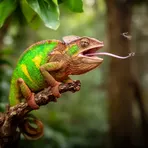
A lizard from Africa and Madagascar that changes its skin color and catches insects with a long tongue
Idioms

Compounds



- Specialized
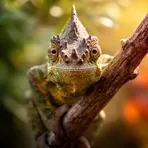
A lizard from Africa that can change color and move its eyes separately

Surface Forms
Etymology
Chameleon comes from Greek parts khamaí ('on the ground') and león ('lion'), so it originally meant 'ground lion'. The name fits the small lizard that lives on the ground and is famous for changing its color and shooting out a long tongue to catch insects.