
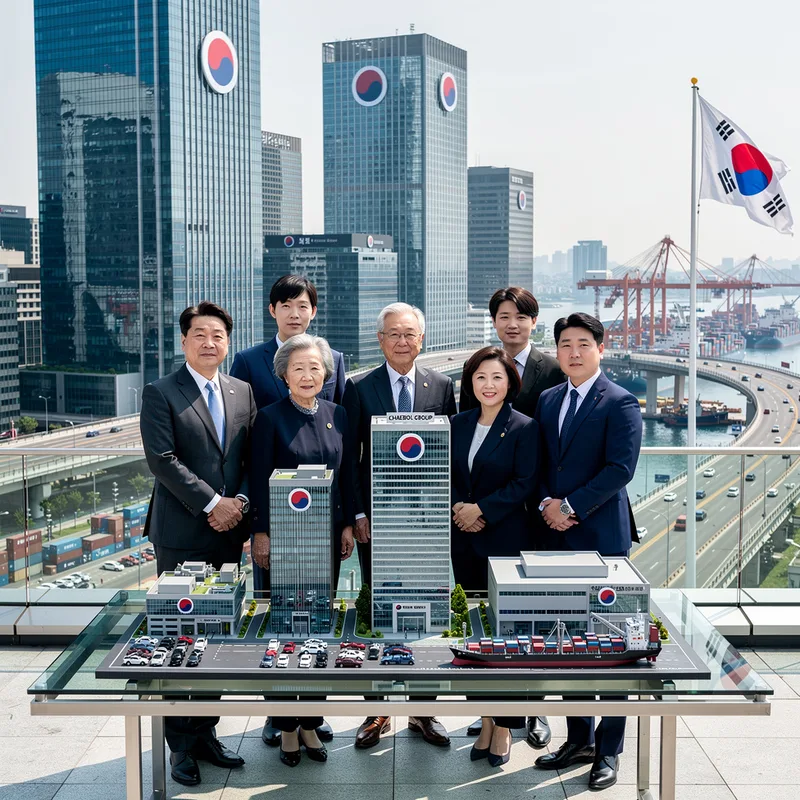
chaebol
 1
9.6

- noun
- /ˈtʃeɪbɒl/
- Literature
- Democratization and social mobilization forced the state to become more accountable, which limited its leverage over the chaebol.
- Korean chaebol
- top chaebol
- large chaebols
Examples
-
Large South Korean conglomerates, called chaebols, have been critical to growth.
Academic text (1997) -
Thus, the chaebol depended on an activist state to provide subsidized credit and to bail them out of economic troubles.
Academic text (2004) -
As the global economy changed, the chaebol could no longer depend on government support.
Academic text (2004) -
In return, the chaebol gave large contributions to the ruling party.
Academic text (2002) -
And as the government never relinquished its control over the banking system, the chaebol did not become financially independent until the late 1980s.
Academic text (2004) -
In the 1980s, for example, the top five Korean chaebol accounted for just over half of GNP.
Academic text (2002) -
When South Korea imposed a Japanese-style business structure, the chaebol were not, like the Japanese keiretsu, professionally managed, but instead family-owned and controlled.
Academic text (2004) -
In 1998, some large chaebols, including Hanbo and Kia, went bankrupt because of their inefficient and unprofitable business practices.
Academic text (2000) -
Under the Park regime, the large South Korean conglomerates or chaebol (spelled jaebol by Moreira) and the state worked out a symbiotic relationship.
Academic text (1997) -
The Samsung chaebol has become a global leader in technology and innovation.
Synonyms
 104
2.4
A company owned and run by people from the same family
How Big
42
7.0

- Literature
1
9.6
904
3.7
∞
1.0
- Canadian
12
2.8
Surface Forms
Etymology
Chaebol comes from Korean words jae ('wealth') and beol ('clan' or 'family'), so it literally means a 'wealthy family'. That's why chaebol is used for a large, family-owned business group that controls many companies.