
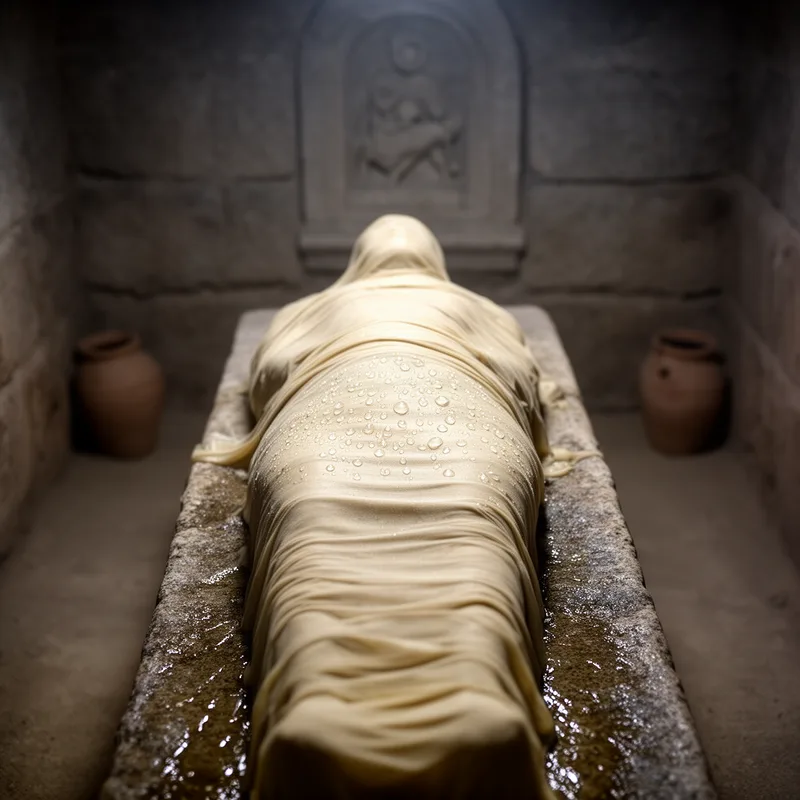
cerecloth
9.9
A waxed, waterproof cloth used to wrap a dead body for burial
- noun
- /ˈsɛrəˌklɔθ/
- Archaic
:
cerecloth
- A corpse was embalmed as that of Edward II (the face being completely concealed in cerecloth) and buried in Gloucester; the sole chronicler to note its display in the abbey prior to burial recorded that it could only be seen superficially.
Examples
-
They used cerecloth to cover the deceased during the funeral service, ensuring it remained undisturbed.
-
The historic exhibit displayed a cerecloth shroud, showcasing the traditional practices of embalming.
-
A magnolia fawn wrapped in cerecloth curled under a briar patch.
Academic text (2014) -
In ancient times, a body was often wrapped in cerecloth before burial to preserve it.
Synonyms

shroud
vscerecloth
 22
7.2
22
7.2

A cloth used to wrap a dead body before burial
is more specific a waterproof waxed burial wrap used in the past
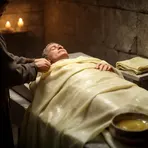

 1
9.9
1
9.9
A waxed cloth used to wrap a dead body for burial
is narrower denoting a waterproof waxed material often used in the past

burial garment
vscerecloth
7.9
A cloth used to wrap a dead person for burial
is narrower denoting a waterproof waxed cloth used historically for burial
Surface Forms
cerecloth singular
cerecloths plural
Morphology
Etymology
Cerecloth comes from the Latin root cera 'wax' and the word cloth, so it literally means a 'wax cloth'. That wax-covered fabric kept out water, which is why people used it to wrap and protect dead bodies.